
Keeping drinks cold and food safe depends on one unglamorous thing: a steady flow of clean ice. When the bin runs low in the middle of service, tickets pile up, staff scramble, and guests notice. Owners know they need reliable equipment. The hard part is choosing between leasing and buying when cash is limited and the future of a location still feels uncertain. The goal here is to give you practical tools and simple math so you can match the financing choice to the real life of your bar, café, or restaurant.
Budget Analysis: Cash Flow vs Capital Investment
Money usually acts as the first filter. Buying a commercial ice maker turns a chunk of cash into equipment that serves you for years. Leasing turns that same cost into a smoother monthly payment. Both can work; you simply need the one that fits your cash position and your comfort with long-term commitments.
A quick comparison helps:
You can also translate the choice into a monthly figure.
- For ownership, a simple estimate is:
Monthly cost (own) ≈ Purchase price ÷ (12 × expected life in years) + Yearly maintenance ÷ 12 + Yearly utilities ÷ 12
- For leasing:
Monthly cost (lease) ≈ Lease payment + Extra maintenance ÷ 12
Many operators also like a rough break-even estimate:
Break-even years ≈ Purchase price ÷ (12 × lease payment − Yearly maintenance)
If the break-even period is shorter than the time you realistically expect to stay at this address, buying starts to look more attractive.
Tax rules in the United States add another layer. Many small businesses can treat qualifying equipment as an expense in the first year under Section 179 of the Internal Revenue Code. For the 2024 tax year, the Section 179 deduction limit reaches 1,220,000 dollars, with a phaseout threshold of 3,050,000 dollars in total qualifying property placed in service. Ice machines usually fall under tangible personal property, so purchase decisions should be reviewed with a tax professional before you commit.
Business Needs Assessment: Volume, Quality & Reliability
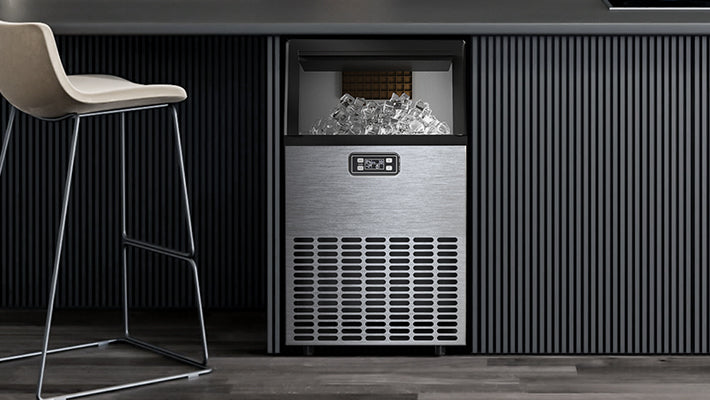
Financing details only help when they rest on a clear picture of what you need the machine to do. An under-counter commercial ice maker might suit a neighborhood wine bar with steady cocktail traffic. A hotel kitchen that supplies several bars and banqueting rooms needs a completely different setup.
Begin with demand. Estimate how many pounds of ice you use in a normal day, then look at weekends, holidays, and hot spells. That gives you a realistic range rather than a single number.
Roughly speaking:
- Small cafés and bakeries often sit in the 50 to 150 pound per day range.
- Busy bars and casual restaurants tend to fall between 200 and 500 pounds per day.
- Hotels, nightclubs, and large venues can require several hundred pounds every shift.
Quality and reliability follow closely behind volume. Look for machines with self-cleaning cycles, corrosion-resistant components, and clear access to filters. Staff should feel confident triggering a clean cycle and spotting simple issues before they turn into breakdowns.
Once you understand demand and quality expectations, capacity and bin size fall into place. At that point, you can match realistic volume to a unit and then revisit the question of buying or leasing that specific model.

Risk Tolerance: Maintenance, Repairs & Obsolescence
Every ice machine brings work along with cold drinks. The question is simple: how much surprise and responsibility are you willing to carry yourself, and how much do you want to hand to someone else for a fee?
When you Own the Machine
- You schedule and pay for routine cleaning. Regular professional cleaning two times a year, plus filter changes, should sit in your annual budget.
- You absorb repair risk. Small fixes may stay in the low hundreds of dollars. Major parts like compressors or control boards can run higher and often arrive at the worst possible moment.
- Downtime becomes your problem to solve. If the unit fails before a weekend, you may pay for bagged ice, overtime, or even lost covers. That indirect cost belongs in your thinking, not only the technician's invoice.
- You decide when to replace. A paid-off unit can keep running for many years, even if it uses a little more power than newer models. You choose the point where extra efficiency or quieter operation justifies a new commercial ice maker.
When you Lease the Machine
- Maintenance often sits inside the contract. Many providers include routine cleaning and basic service in the monthly payment, which reduces planning work for your team.
- Repair risk shifts outward. If something fails, the provider usually sends a technician and covers parts inside the terms of the lease. You still lose some service time, yet the shock to cash flow softens.
- Obsolescence becomes a smaller worry. At renewal, you can move to a newer model if your volume or standards change, instead of feeling locked into an older purchase.
- You trade long-term savings for lower stress. The total you pay over several years often exceeds the cost of owning the same unit, but you buy predictability and fewer surprise expenses.
If your team is comfortable planning maintenance, watching basic sanitation, and building a small repair reserve, ownership fits well. If past breakdowns left you scrambling, a lease that includes service may align better with your risk tolerance.
Usage Scenarios: Location, Seasonality & Growth Plans
Two venues can sell similar menus and still face very different realities. Floor plan, lease terms, climate, and expansion plans all shape the smarter choice between owning and leasing.
Situations where buying fits better
- Year-round, steady trade: The location runs most days of the year, with only modest slow periods. Spreading equipment cost across constant use gives ownership a clear advantage.
- Stable lease and long horizon: You expect to stay in the same space for at least three to five years, so a permanent install feels safe.
- Defined layout and workflow: The back bar, dish area, and service stations are already set. An under-counter unit or back-of-house machine can be sized and plumbed once, then left alone.
- Clear growth path: You know roughly how many covers you want in two or three years. That makes it easier to pick a machine that will still match demand later instead of outgrowing a short-term solution.
Situations where leasing fits better
- Strong seasonality: Beach bars, resort cafés, food trucks linked to summer events and stadium concessions often have intense peaks and quiet off-seasons. A lease can be structured around those patterns more easily than a purchase.
- Uncertain location: If the building lease is short, the neighborhood is changing fast, or the concept is still under test, a long equipment commitment may feel heavy. A leased unit can move or be returned when plans change.
- Space in transition: You might be renovating, adding a patio bar, or reworking the kitchen layout. Leasing gives you time to learn ideal positions for a countertop commercial ice maker or larger unit before you invest.
- Rapid format experiments: Groups that test multiple concepts or pop-up formats in the same footprint often prefer flexible contracts that let them scale equipment up or down without selling used machines.
Look honestly at how fixed your location is, how predictable your seasons feel, and how likely expansion or relocation is in the near future. Once those pieces are clear, the choice between leasing and buying usually lines up naturally with the way your business actually operates.
Who Should Buy a Commercial Ice Maker?
Ownership of a commercial ice maker suits operators who value control, long-term savings, and stable operations. If several of the points below sound familiar, buying deserves a serious look.
- You have run in the same space for at least a couple of years and plan to stay for several more.
- Daily demand for ice is predictable, with only modest spikes.
- Your team already follows routines for equipment cleaning and food safety.
- You can set aside a budget for yearly maintenance and occasional repairs.
- Your accountant can help you use Section 179 expensing or depreciation on the equipment.
Buying also lets you match capacity, bin style, and footprint to your exact floor plan. You choose the filtration setup, plumbing layout, and cleaning schedule.
When you spread the purchase price across the expected life, then add realistic maintenance and utility costs, ownership usually results in a lower monthly figure than leasing a similar machine. In many cases, the monthly cost lands below the combined bill for bagged ice and emergency rentals.
Who Should Lease a Commercial Ice Maker?
Leasing a commercial ice maker serves a different set of needs. If your top priority is predictable cash outflow and minimal surprise repairs, a lease can feel like a relief. The contract turns a complex mix of maintenance, breakdowns, and replacement risk into one invoice.
The profile below often points toward leasing:
- Your business model relies on seasons or events rather than steady year-round trade.
- The building lease term is short, or you are still testing the location.
- You prefer to focus staff time on service instead of equipment upkeep.
- Past experience with surprise repair bills created real cash pressure.
- You want access to newer equipment without tying up capital.
As long as you compare several quotes and understand what maintenance and repairs the provider will cover, leasing can support a clear and steady cost structure.
Choose the Commercial Ice Strategy That Fits Your Business
Leasing and buying each solve the same operational problem in different financial ways. Ownership suits stable venues that see clear long-term demand and have the patience to maintain equipment. Leasing supports operators who value flexibility, predictable invoices, and lighter responsibility for repairs. The most helpful move is to gather a small set of quotes, estimate monthly costs for each scenario, and match those figures to your real risk tolerance and growth plans. With that work done, the choice around ice production stops feeling like a gamble and starts to look like a deliberate part of your business model.
FAQs: Common Ice Maker Financing Questions
Q1: How much does a commercial ice maker really cost once financing and daily use are included?
Think in monthly terms. Take the total purchase price, divide it by 12 times the years you expect to use the machine, then add yearly maintenance and utilities divided by 12. That gives you a rough "ownership per month" number. Put lease quotes next to that figure, and add your current spend on bagged ice. When you see all three numbers side by side, the better option for your bar, café, or restaurant usually stands out very quickly.
Q2: When should I stop buying bagged ice and invest in my own machine?
Track what you spend on bagged ice each month over at least one full busy season. Then compare that average monthly bill with your estimated monthly ownership cost for a commercial ice maker. If bagged ice keeps costing more, month after month, you are effectively paying to support someone else's equipment instead of building your own asset. That crossover point is a strong sign that investing in a machine will likely pay off within a reasonable time frame.
Q3: What do lenders or leasing companies check when I apply for financing?
Most lenders and leasing providers focus on a few basics: how long you have been in business, recent revenue trends, and your credit profile. New operators often feel nervous about this, but clear records help a lot. Keep simple financial statements up to date, prepare a short cash flow forecast, and be ready to explain how the ice machine supports drink and food sales. When you present a clear link between the equipment and your revenue, approval conversations tend to go much more smoothly.


Leave a comment
All comments are moderated before being published.
This site is protected by hCaptcha and the hCaptcha Privacy Policy and Terms of Service apply.