
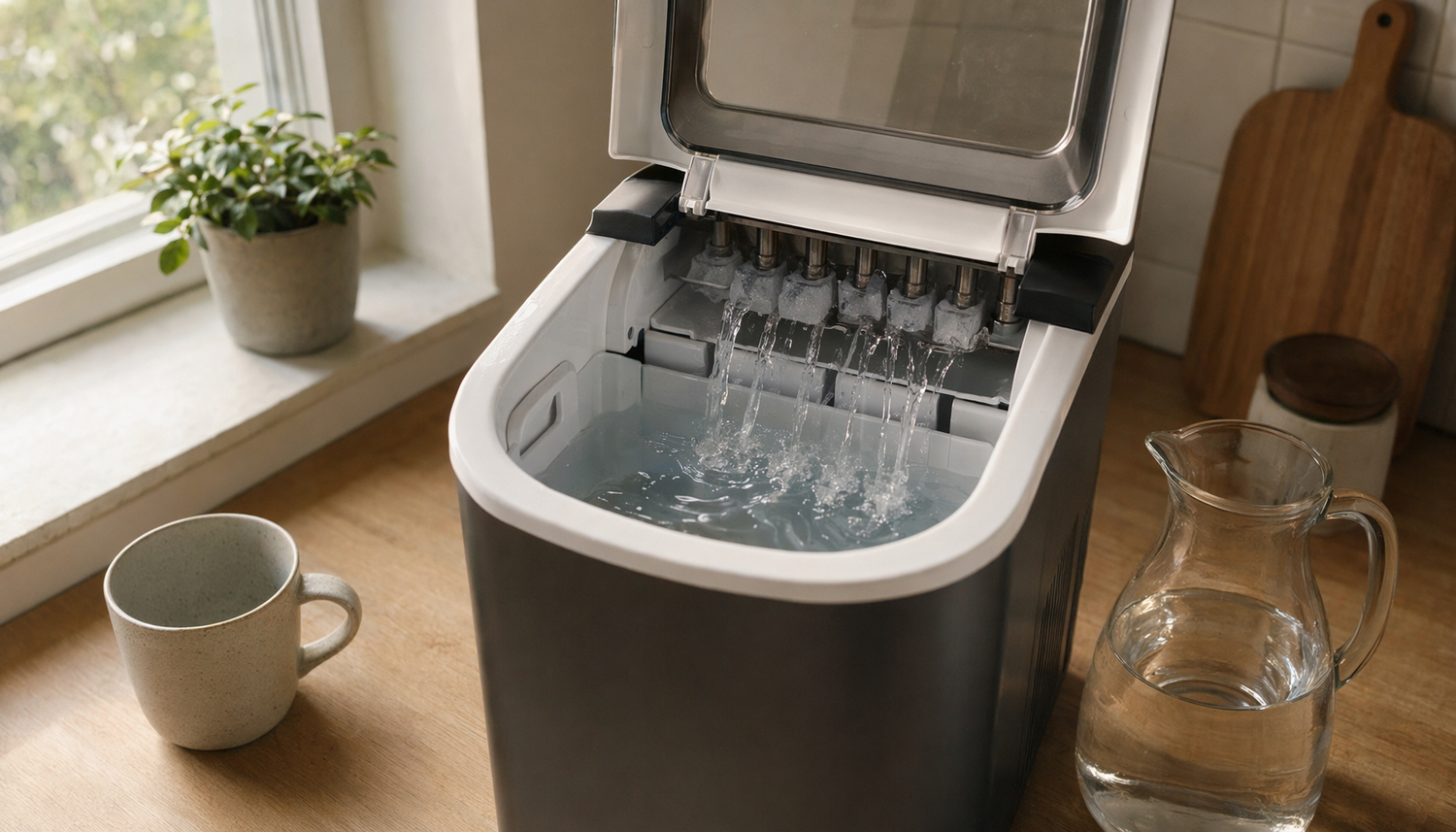
A countertop ice maker recirculates water by pumping it from a small reservoir over a chilled ice-making surface, freezing part of that water into cubes or bullets, and returning the unfrozen water to the tank for the next cycle.
If you hear water running inside a portable ice maker even after the first batch drops, that is usually normal. Many countertop models can start producing ice in several minutes and may fill a basket in roughly 1 hour 15 minutes to 2 hours 35 minutes, depending on model size, room temperature, water temperature, and bin capacity. This guide explains what is happening inside the machine, why recirculation matters, and how to keep the water loop working well at home, in an RV, or in a small office refreshment area.
What Recirculation Means in a Countertop Ice Maker

The basic water path
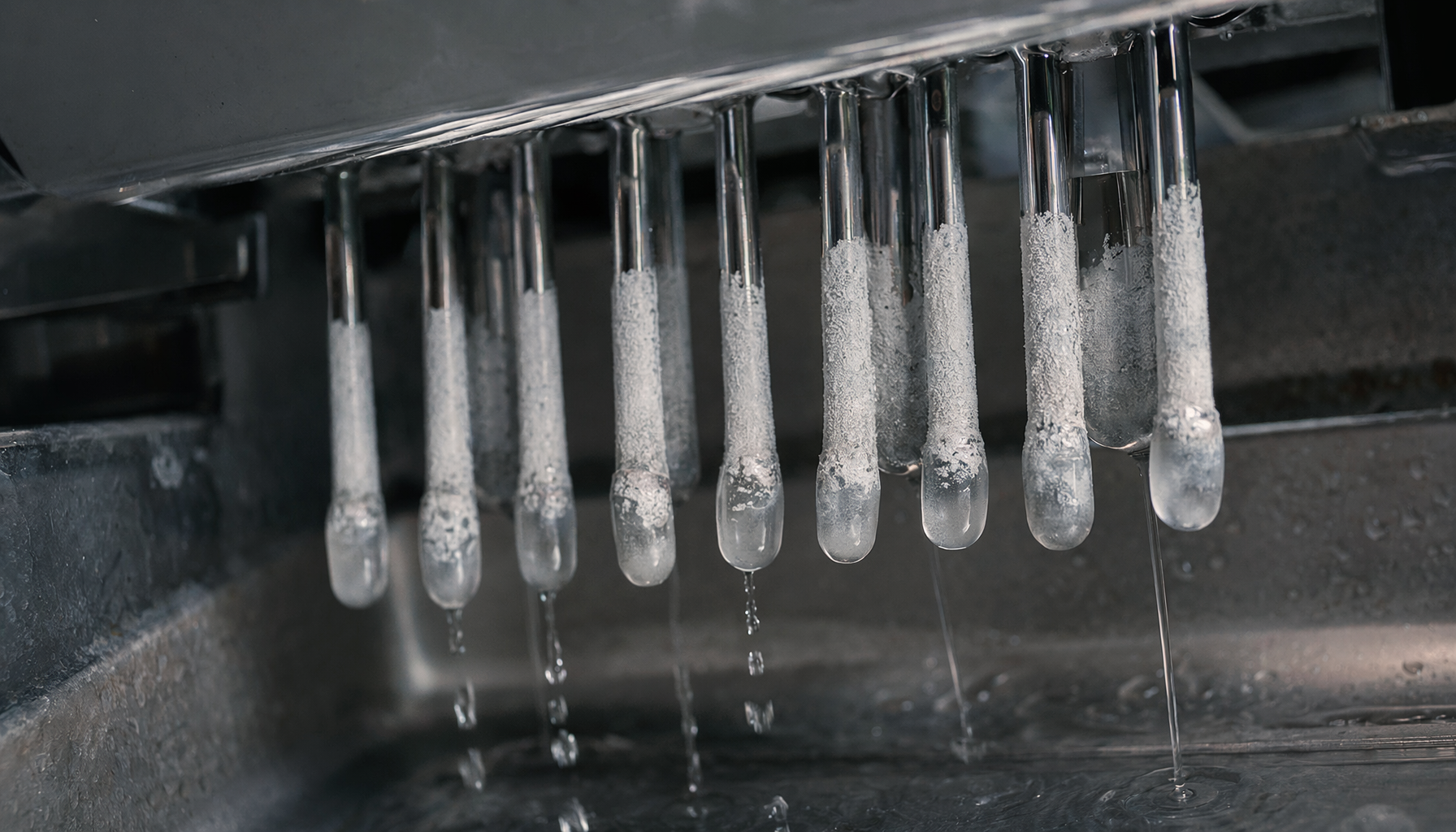
In most countertop ice makers, the water does not pass through the machine only once. You fill a reservoir, the internal pump lifts water to the freezing area, and the machine runs that water over chilled metal fingers, a cold tray, or another evaporator surface. As the refrigeration system pulls heat away, a portion of the water freezes into ice.
The remaining unfrozen water drains back into the reservoir or a lower channel. That returned water is then pumped again during the same cycle or the next cycle. This is why the machine can make repeated batches without needing a direct plumbing connection.
Why the water keeps moving
That flowing sound is part of the freezing process. Moving water helps the machine expose fresh water to the cold surface, build ice layer by layer, and avoid leaving too much stagnant water around the evaporator. When the batch is ready, the machine briefly warms or releases the ice-making surface so the ice falls into the basket.
This design is especially useful for portable ice makers because it keeps the appliance compact. A typical countertop reservoir may hold about 37-85 fl oz of water, so recirculation lets that limited supply support multiple ice-making cycles instead of draining unused water after each pass.
Does a Countertop Ice Maker Reuse the Same Water?

Yes, until it freezes, melts, or is drained
A countertop ice maker generally reuses reservoir water until it becomes ice, evaporates slightly, is carried away in the ice basket, melts back into the tank, or is drained by the user. If the basket is not refrigerated, stored ice can slowly melt. Many machines route that meltwater back into the reservoir so it can be frozen again.
That reuse is not automatically a problem. Ice is treated as food in regulated packaged-ice settings, and safe ice production depends on clean equipment and sanitary water; a food-safety agency notes that ice is considered food regardless of shape or water source. For home and light-business use, the same practical idea applies: start with potable water, keep contact surfaces clean, and empty old water when the machine has been sitting.
What recirculation does not mean
Recirculation does not mean the machine filters or refreshes water by default. Some models include a filter screen or recommend filtered water, but a standard portable ice maker is mainly freezing water, not purifying it.
Freezing can change texture and appearance, but it should not be treated as a substitute for using safe water. If your tap water tastes strongly of chlorine, minerals, or plumbing residue, the ice may carry that flavor because the same water continues to circulate through the machine.
How Recirculation Affects Ice Quality, Taste, and Scale

Minerals can become more noticeable
Each freezing cycle pulls some water into ice while leaving some dissolved minerals behind in the reservoir. Over repeated cycles, especially with hard water, those minerals can become more concentrated. That is one reason scale may appear on the water tray, evaporator fingers, pump area, or drain plug.
For better everyday results, use cold potable water and avoid leaving the same reservoir water in the machine for days. If your home has hard water, filtered water can help reduce mineral taste and visible buildup, though it will not remove the need for cleaning.
Taste depends on water and maintenance
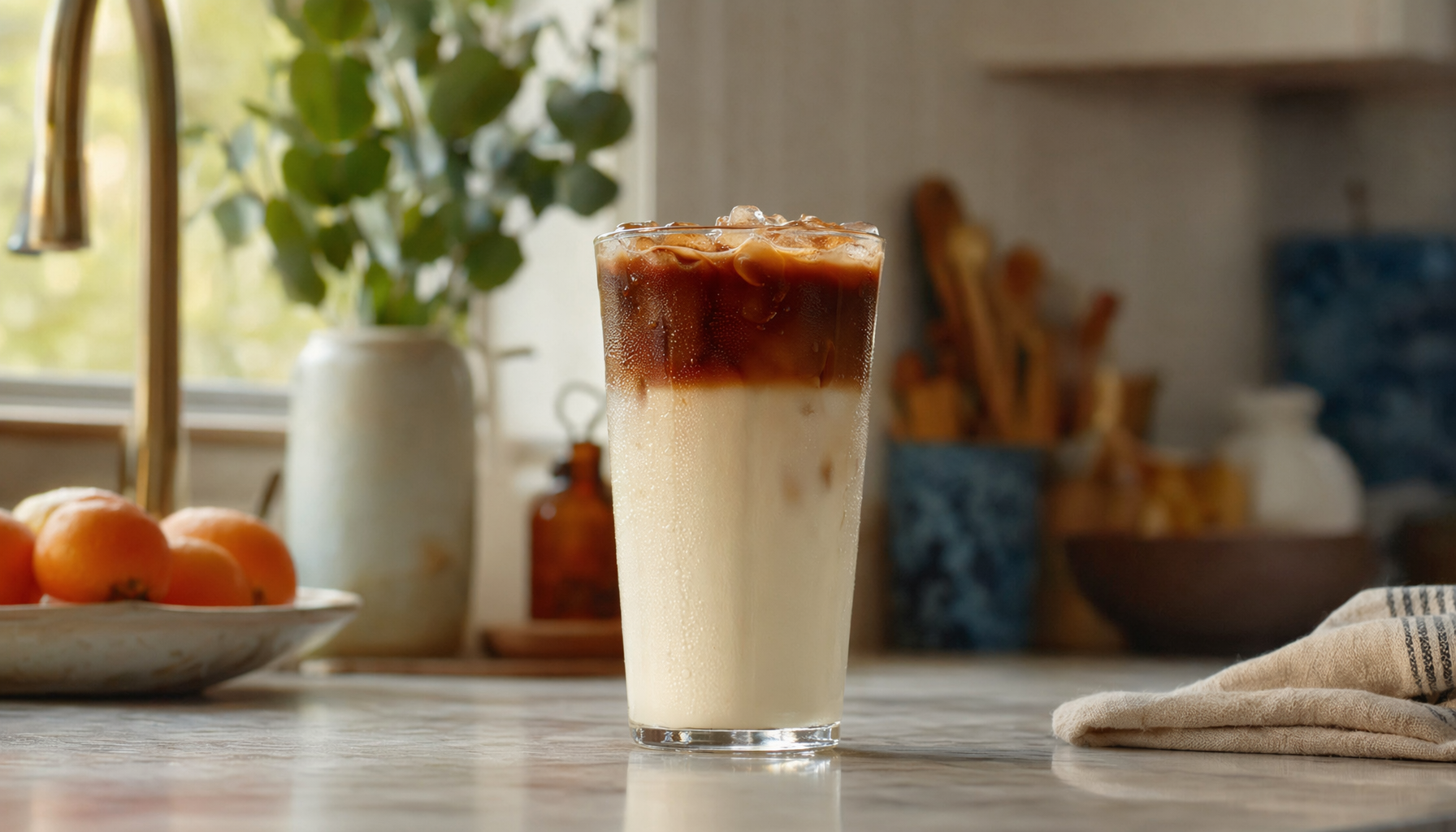
Because the machine recirculates water across internal surfaces, stale water, residue, and mineral film can affect ice flavor. This is most noticeable when the ice is used in plain water, iced coffee, cocktails, or sparkling drinks where off-flavors are easy to detect.
For home kitchens, drain the tank after heavy use or before storage. For RVs, dorm rooms, small offices, and breakrooms, it is better to refill with fresh water daily than to keep topping off the same tank indefinitely.
Cleaning Implications of a Recirculating Water Loop

Wet surfaces need routine attention
A recirculating ice maker has several wet contact areas: the reservoir, pump inlet, water channels, ice tray or evaporator area, basket, scoop, and drain path. These areas can collect minerals and residue over time. Food-industry research describes biofilms as microbial communities that attach to surfaces and form a protective slimy layer, and biofilms can form on plastic, stainless steel, rubber, and other common surfaces.
That does not mean every countertop ice maker is unsafe. It means the water loop should be treated like a reusable food-contact system. Cleaning is not just cosmetic; it helps keep ice tasting fresh and helps the machine move water properly.
Self-cleaning is helpful, but not hands-off
Many countertop ice makers include a self-cleaning mode. In practical terms, this usually circulates water or a manufacturer-approved cleaning solution through the internal loop for a set period. It can help reach channels that are hard to scrub by hand, but it does not replace draining, wiping removable parts, or following the manual.
After a water disruption or boil-water notice, a more cautious reset is appropriate. Local utility guidance commonly recommends discarding existing ice and cleaning appliances by the owner’s manual; one public utility advises that ice makers should have existing ice discarded after a disruption. Food-service guidance after a boil-water order also emphasizes flushing, discarding ice, and following manufacturer cleaning procedures for ice machines with internal circulation paths.
Water, Energy, and Production-Cycle Trade-Offs

Recirculation reduces water waste, not energy use by itself
Because unfrozen water drains back into the reservoir, a countertop ice maker wastes less water than a design that would dump unused water after each cycle. That is useful when you are making ice on a counter, in a camper, at a picnic setup with bottled water, or in a small office where plumbing is not available.
Energy use is a separate issue. The compressor, fan, pump, and control board still need power, and performance changes with conditions. Warm rooms, warm starting water, poor ventilation, and frequent lid opening can slow production and make the unit work harder.
Production speed depends on the full setup
A countertop ice maker may make its first small batch quickly, but the full-bin time depends on more than the advertised cycle length. Water temperature, ambient temperature, ice size setting, reservoir volume, and basket capacity all matter.
For everyday use, place the machine where the side and rear vents have breathing room, use cold potable water, and empty the basket into a freezer if you need firm ice for later. Most countertop models are ice makers, not freezers, so ice left in the basket may soften and melt back into the recirculation loop.
Smart Controls, Sensors, and Useful Specifications

What the sensors usually monitor
Common countertop ice maker controls include add-water alerts, ice-full sensors, ice-size selection, cleaning mode, and timer settings. These features do not change the core recirculation process, but they make the loop easier to manage. For example, an add-water alert helps protect the pump from running without enough reservoir water, while an ice-full sensor pauses production when the basket is full.
Some newer appliances may include app controls, scheduling, status alerts, or reminders. These are convenience features rather than substitutes for checking water quality, cleaning parts, and draining old water.
Specs worth comparing
When choosing a portable ice maker, compare the specifications that affect real use:
- Reservoir capacity: A larger tank can reduce refills, but it also means more standing water if you do not use the machine often.
- Daily production rating: Treat “up to” production numbers as ideal-condition estimates.
- First-batch time: Useful for drinks on demand, but full-bin time matters more for parties or office use.
- Ice storage design: Removable baskets and accessible drains make cleaning easier.
- Cleaning mode: Helpful for circulating cleaning water through internal channels.
- Ventilation clearance: Important for energy use and consistent ice production.
- Drain location: A front or low-side drain can make emptying the reservoir less awkward.
FAQ
Q: Why does my countertop ice maker keep running water over the ice tray?
A: The pump is recirculating water over the chilled surface so ice can form gradually. The water that does not freeze drains back into the reservoir and is reused in the next part of the cycle.
Q: Is recirculated water in an ice maker safe to drink?
A: It depends on the starting water and machine cleanliness. Use potable water, clean the reservoir and basket regularly, and drain old water after periods of nonuse. Ice should be handled like food; packaged-ice rules emphasize clean equipment and safe water.
Q: Should I leave water in my countertop ice maker overnight?
A: For frequent daily use, overnight water is usually a practical judgment call, but fresh water gives better taste. If the machine will sit unused, drain it, wipe accessible surfaces, and leave parts dry before storage.
Practical Next Steps
For the best results from a recirculating countertop ice maker, start with cold potable water, give the vents room to release heat, empty soft ice into a freezer when you need longer storage, and drain the reservoir when the machine will not be used again soon.
Use the self-cleaning cycle on the schedule in your manual, but also remove and wash the basket, scoop, and accessible water-contact parts. If you notice cloudy residue, slower production, odd taste, or water-flow changes, treat those as signs to drain, clean, rinse, and restart with fresh water.

Leave a comment
This site is protected by hCaptcha and the hCaptcha Privacy Policy and Terms of Service apply.