
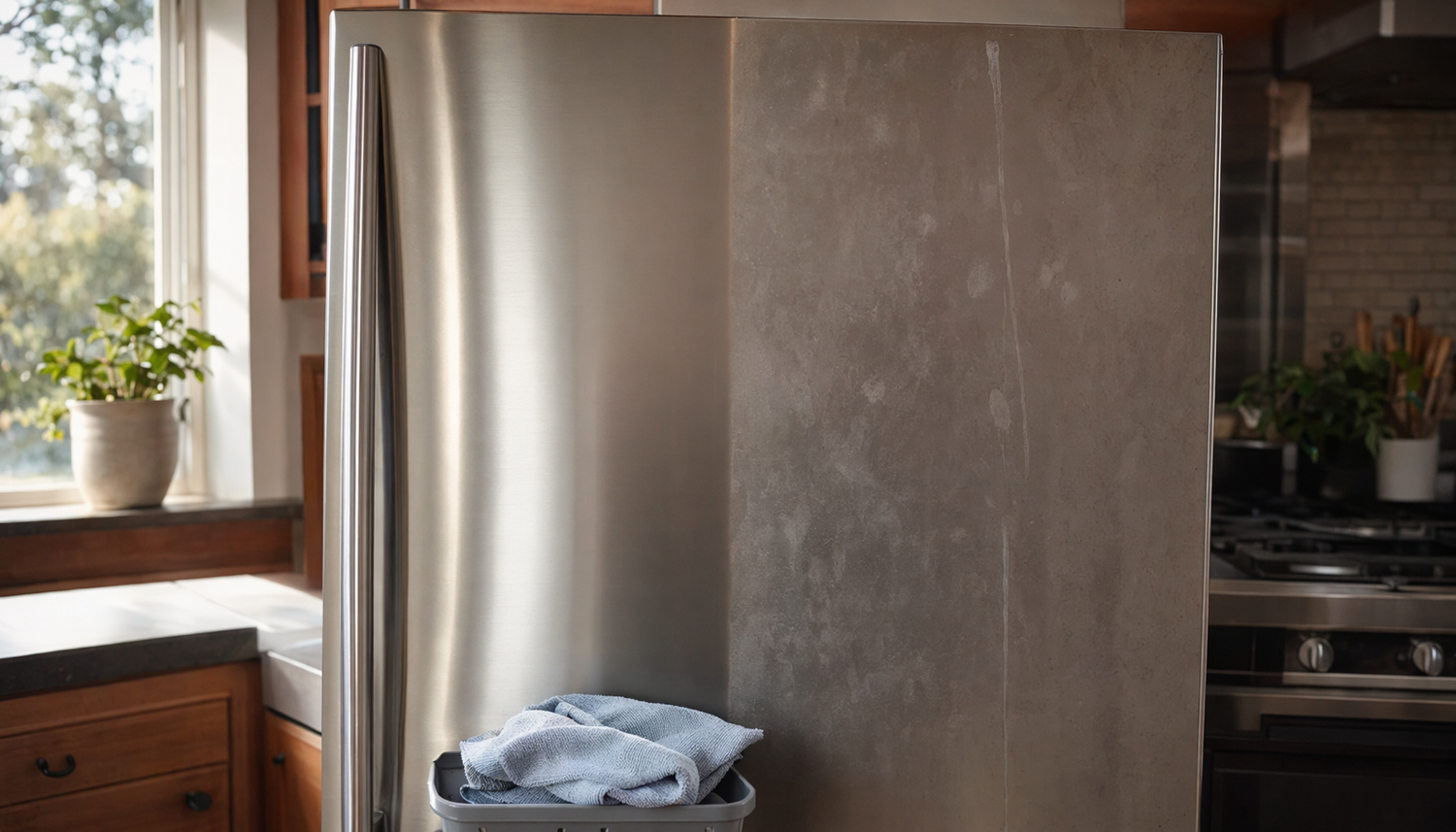
Mild dish soap and warm water are the safest routine choice for most stainless steel refrigerator exteriors. For fingerprints and light water spots, a microfiber cloth with a little rubbing alcohol, club soda, or a label-approved glass cleaner can also work well.
Fingerprints on the door, streaks around the handle, and splashes near the dispenser can make an otherwise clean kitchen, office beverage station, or RV setup look worn fast. In regular appliance care, the best results usually come from simple products used with the right wipe-and-dry method, not from stronger chemicals. You’ll get a practical list of what to use, what to avoid, and how to clean stainless steel on full-size refrigerators, portable refrigerators, car refrigerators, beverage coolers, and wine coolers without making the finish look worse.
Start With the Safest Household Options

For routine exterior cleaning, the most dependable first step is a soft microfiber cloth, warm water, and a few drops of mild dish soap or detergent. A basic detergent wash-and-rinse method is a long-standing housekeeping standard for refrigerator exteriors, and it works because it removes skin oils, light grease, and kitchen dust without relying on harsh chemistry.
If the door still shows smudges after that first pass, a few common household products can help. Rubbing alcohol can cut oily fingerprints, club soda can brighten a dull-looking panel, and some glass cleaners can work on stainless steel exteriors when the label specifically includes appliance exteriors or stainless steel. The trade-off is simple: these spot cleaners are useful for finish touch-ups, but soap and water remain the safest everyday baseline.
Safer household options at a glance
Household product |
Best use |
How to use it |
Main caution |
Mild dish soap or detergent solution |
Everyday fingerprints, light grease, dust |
Dampen a microfiber cloth, wipe with the grain, then wipe again with clean water and dry |
Do not leave soapy residue on the surface |
Rubbing alcohol |
Oily fingerprints around handles or touch points |
Put a small amount on a cloth, not directly on the appliance, then dry immediately |
Test a small hidden area first |
Club soda |
Light polishing and fresh water spots |
Apply to a cloth and buff lightly with the grain |
Not necessary for every cleaning |
Diluted vinegar |
Occasional mineral spots or stubborn streaks |
Use sparingly on a cloth, then follow with plain water and dry |
Do not mix with bleach; avoid routine use if the finish is sensitive |
Label-approved glass cleaner |
Fast touch-up on exterior panels or trim |
Spray the cloth, not the appliance, and keep it away from seams and controls |
Only use products whose label includes stainless steel or appliance exteriors |
On a beverage cooler door in a rec room or a wine cooler in a dining area, this simple approach usually handles 90% of visible mess. In my experience, people get into trouble when they escalate too quickly from a damp cloth to abrasive powders, bleach, or aggressive degreasers that solve one problem and create streaking, haze, or finish damage.
How to Clean Stainless Steel Without Streaks

Technique matters as much as product choice. For hard, nonporous equipment surfaces, cleaning works best when visible soil is removed before any stronger chemistry is considered, which is why a stainless steel refrigerator door usually responds better to a damp, soapy wipe than to a heavy spray-and-wait routine.
A simple 5-minute method
Start by turning the appliance off if it is a portable refrigerator, car refrigerator, or beverage cooler with exposed controls near the area you are cleaning. Use a well-wrung microfiber cloth rather than a dripping one, wipe with the grain of the stainless steel, and pay extra attention to handles, edges, and the strip around the gasket where skin oils collect. Follow with a second cloth dampened with plain water to lift residue.
Finish by drying the panel right away with a clean, dry microfiber cloth. That last step is what usually prevents cloudy streaks and hard-water marks. On a home refrigerator next to a sink, or a car refrigerator that has been used at the beach or campsite, immediate drying matters more than people expect because mineral-heavy droplets leave the visible spots, not the stainless steel itself.
Where to be extra careful
With portable and travel units, use less liquid than you would on a full-size kitchen refrigerator. Moisture can seep into lid seams, 12V power ports, vent openings, or display bezels if you spray directly onto the appliance. A cloth-first method is safer for units that move often, especially if they are used in a truck, RV, boat, or outdoor prep setup where dust and road film collect around latches and trim.
For beverage coolers and wine coolers, clean the glass and the stainless trim separately. Glass cleaner overspray often causes the stainless border to streak, while stainless cleaner residue can leave a film on the glass. Two cloths and two short passes usually look better than trying to do the whole door in one step.
Which Household Products Deserve Caution

In practice, chlorine solutions are highly corrosive and are a poor routine choice for stainless steel refrigerator exteriors. High-chlorine products can contribute to pitting over time, especially if residue sits on the surface or gets trapped around seams, badge plates, or dispenser trim.
Bleach also creates a bigger safety risk than many homeowners realize. The same guidance warns not to mix bleach with acids such as vinegar, and bleach should never be mixed with ammonia or other cleansers. That matters in real homes because people often rotate between products under the sink without fully rinsing the surface or cloth between uses.
Products and habits to skip
Avoid steel wool, abrasive scrub pads, scouring powders, and oven cleaners on stainless exteriors. Even when they remove grime quickly, they can scratch the grain, dull coated finishes, or leave the door looking patchy under daylight. Baking soda is better saved for interior deodorizing tasks than for aggressive scrubbing on a visible brushed-metal finish.
Heavily fragranced, thickened, or specialty bathroom chemicals also deserve caution unless the label clearly says they are suitable for stainless steel or appliance exteriors. Stronger products may be reasonable for a one-time mess, but they are not the safest maintenance choice for a refrigerator, beverage cooler, or wine cooler you want to keep looking consistent over time.
Cleaning is not the same as sanitizing
For exterior stainless steel, the goal is usually removing oils, dust, and splashes, not trying to sanitize the door like a food-contact prep table. On equipment surfaces, sanitizers only work after thorough cleaning and must be used exactly as labeled, so routine exterior care should stay focused on simple cleaning unless a product specifically calls for a different process.
That distinction matters for homes, break rooms, and mobile setups alike. If a portable refrigerator is carrying drinks and snacks for a road trip, a clean handle and latch area are important, but that still does not mean stronger chemistry is automatically better for the stainless finish.
Best Approaches for Portable Refrigerators, Car Refrigerators, Beverage Coolers, and Wine Coolers

A full-size kitchen refrigerator can usually tolerate a more relaxed cleaning pace than a portable unit. A car refrigerator or portable refrigerator often has tighter seams, a smaller lid opening, a nearby display, and more exposure to dust, sunscreen, drink spills, and power-cord handling. That makes lightly damp cloth cleaning the better fit, especially before you reconnect AC or 12V power.
Power management also affects how you clean. If the unit is plugged into a vehicle outlet or backup power station, switch it off first so the compressor or fan is not cycling while the lid stays open and moisture is near the controls. For travel and outdoor use, it is smart to clean the exterior after unloading but before storing the unit, since dried sports drink, salt, or campground dust is harder to remove a week later.
Temperature control and food safety still matter while you are focused on appearance. If you are cleaning around the door edge, avoid leaving the refrigerator or cooler open longer than necessary, especially if it is holding milk, ready-to-drink coffee, juice, or other perishable items. A stainless exterior can look spotless and the contents can still become a problem if the appliance spends too long warming up during a deep-clean session.
When a specialty stainless cleaner is worth it
A household-only routine is enough for many owners, but a specialty stainless cleaner can make sense when fingerprints are constant. That often happens on office beverage coolers, family refrigerators with kids opening the door all day, or wine coolers in entertaining areas where the front panel is always visible. The advantage is usually cosmetic: easier buffing, faster streak removal, and sometimes a finish that hides fingerprints a little longer.
The trade-off is that specialty cleaners are an upgrade, not a requirement. If mild soap, a microfiber cloth, and careful drying already keep the surface looking even, there is no practical reason to force a more complicated routine.
FAQ
Q: Can I use vinegar on a stainless steel refrigerator exterior? A: Yes, but use it as an occasional spot cleaner rather than your default routine. Put a small amount on a cloth, wipe the mark, then follow with plain water and dry the surface. Never combine vinegar with bleach, and stop if the finish looks dull or smeary.
Q: Is glass cleaner safe for stainless steel? A: Sometimes. Some household spray labels include stainless steel or exterior appliance surfaces, while others are better suited only to glass. Spray the cloth instead of the appliance, keep cleaner away from seams and controls, and test a small hidden area first.
Q: What is the safest way to remove fingerprints from a beverage cooler or wine cooler door? A: Start with a barely damp microfiber cloth and a drop or two of mild dish soap. If prints remain around the handle, use a little rubbing alcohol on the cloth and dry the area right away. That usually gives a cleaner result than jumping straight to stronger chemicals.
Practical Next Steps
For most stainless steel refrigerator exteriors, the safest routine is straightforward: mild soap, warm water, a microfiber cloth, wiping with the grain, and immediate drying. Add rubbing alcohol, club soda, or a label-approved glass cleaner only when you need extra help with fingerprints or water spots.
If you are caring for a portable refrigerator, car refrigerator, beverage cooler, or wine cooler, keep liquids controlled around vents, seams, displays, and power connections. And if an older full-size appliance is rusted, pitted, or no longer worth restoring, white goods often require proper recycling and component handling rather than ordinary trash disposal.


Leave a comment
This site is protected by hCaptcha and the hCaptcha Privacy Policy and Terms of Service apply.