
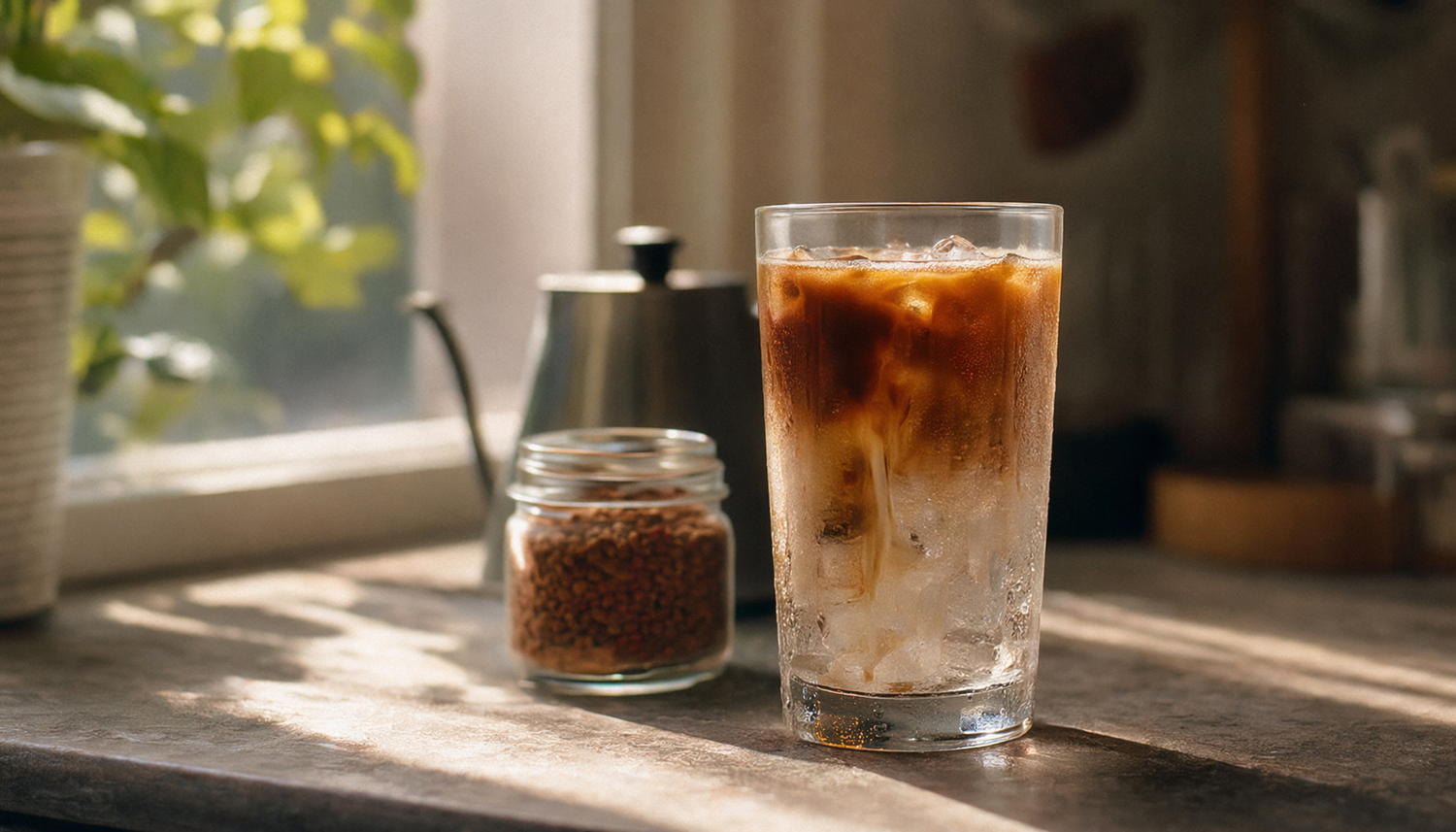
A better instant iced coffee comes down to three things: a stronger coffee base, ice that does not melt too fast, and cold storage that keeps flavor steady instead of watered down.
If your iced coffee tastes thin by the third sip, the problem is usually not instant coffee alone. It is often weak mixing, fast-melting ice, or a drink that sat too warm before serving. A few small changes will give you a cleaner, colder, more balanced cup at home, on the road, or in a small self-serve setup.
Start With a Stronger Base, Not More Ice

Instant iced coffee usually tastes “cheap” when the coffee is mixed at hot-coffee strength and then poured over a full glass of ice. That works for a warm mug, but it collapses in a 16-oz glass because melting ice keeps diluting the drink.
Use a concentrate-style mix
For one serving, use 2 tsp to 1 tbsp instant coffee, depending on how bold you want it, with 2 tbsp hot water to dissolve the granules first. Then add 6 to 8 fl oz cold water or milk. Dissolving the coffee in a small amount of hot water first gives you a smoother drink than dumping granules straight into cold liquid, where they can clump and leave a dusty finish.
If you like a larger iced coffee, scale the coffee first, not the ice. A practical ratio for a 16-oz tumbler is 1 tbsp instant coffee, 2 tbsp hot water, and 8 fl oz cold water before ice. That gives the coffee enough structure to stay present after the cubes start melting.
Sweeten cold drinks the right way
Regular sugar often sits at the bottom of an iced drink. Simple syrup, maple syrup, liquid sweetener, or sweetened creamer mixes more evenly and keeps the flavor profile cleaner. If you want the drink less sweet but still round, add just 1 to 2 tsp syrup first, stir, then taste again after the ice goes in.
Milk also changes the strength calculation. If you plan to add 2 to 4 fl oz milk or half-and-half, mix the coffee slightly stronger than usual. A coffee base that tastes a touch intense before icing usually lands in the right place once the drink is fully built.
Choose Ice That Controls Dilution

Ice is not just for temperature. It changes texture, aroma, and how fast the drink falls apart. For iced coffee, the goal is enough chilling power to cool the drink quickly without turning it watery in a few minutes.
Bigger cubes usually work better for coffee
Larger cubes or well-formed bullet ice generally melt more slowly than small, broken pieces, so the drink stays balanced longer. In practice, that matters most if you sip slowly, add milk, or serve coffee in a large insulated cup. A countertop ice maker that produces consistent pieces can help because uneven, half-frozen ice melts fast and gives you that weak diner-style finish.
For a standard 12- to 16-oz iced coffee, fill the glass about two-thirds with solid ice rather than packing it to the rim with tiny pieces. You want enough ice to chill the coffee fast, but not so much surface area that the drink thins out right away.
Match the ice to the use case
At home, full-size cubes are the easiest default. For travel or patio use, denser ice from a portable ice maker can be more practical because it cools the drink quickly before you head out. In a light-business setting such as a breakfast nook, office bar, or small event station, keeping a separate ice bin for drinks helps preserve taste and reduces constant lid-opening on the main cooler.
If you want a smoother, less diluted result, chill the mixed coffee first, then pour it over fresh ice just before serving. That one step makes instant coffee feel more intentional and less like a rushed shortcut.
Chill It Properly if You Make It Ahead

Iced coffee can be made ahead, but it should be treated like any other prepared beverage that contains milk, creamer, or other perishables. Keeping cold foods at 40°F or below supports both safety and flavor, and it is especially important if you are batch-making drinks for guests.
Best setup for home, travel, and small service
For home use, mix the coffee base in a covered pitcher or bottle and keep it in the refrigerator. A beverage cooler also works well when you want drinks ready to grab without crowding the main fridge. For road trips, camping, or job sites, a car refrigerator is more reliable than a soft cooler if you are carrying milk, cold foam, or pre-mixed lattes.
If the drink includes dairy, do not let it sit out on the counter while you “wait for it to get cold.” Perishable foods and prepared items should be refrigerated within 2 hours, or within 1 hour if the temperature is above 90°F. That matters at backyard brunches, pop-up drink stations, and summer parties where iced coffee often gets treated too casually.
Leave room for airflow and temperature stability
Do not overpack the refrigerator or beverage cooler with bottles pressed tightly together. Cold air needs to circulate to keep drinks evenly chilled. If you are storing several servings for a gathering, shallow bottles or slim pitchers cool faster than one oversized container.
A simple working routine is: mix the coffee base, refrigerate it until fully cold, then pour over fresh ice when serving. That keeps the ice working as a finishing tool instead of doing all the cooling from room temperature.
Pay Attention to Water, Ice Freshness, and Storage Odors

Even a good coffee ratio can taste stale if the water or ice carries freezer smells. Instant coffee is especially revealing here because there is no fresh brew aroma to hide off-notes from old ice trays, open food storage, or a poorly maintained freezer compartment.
Better water makes a noticeable difference
Use fresh, neutral-tasting water for both the coffee and the ice whenever possible. If your tap water has a strong mineral or chlorine note, that flavor can show up twice, once in the mixed coffee and again as the ice melts. In side-by-side tests at home, this is one of the fastest ways to make the same instant coffee taste cleaner without changing brands.
Covered ice storage also helps. If you keep extra ice in a bin, store it away from strongly aromatic foods. Coffee picks up odors easily, especially in milk-based drinks where subtle staleness shows up as a muddy finish rather than an obvious smell.
Clean storage habits matter more in warm weather
For outdoor serving, cold drinks should stay properly chilled and coolers should stay closed as much as possible. If you are setting up an iced coffee bar for a shower, graduation party, or weekend market, use one cooler or ice bin for drinks and another for perishable add-ins. That cuts down on temperature swings and makes the station easier to manage.
If the power goes out, an unopened refrigerator stays cold for about 4 hours and a full freezer for about 48 hours. For anyone storing coffee concentrate, milk, or backup ice ahead of an event, that timing helps you decide what is still usable and what needs to be replaced.
Use Instant Coffee Like a Shortcut, Not a Compromise

Instant coffee works best when you treat it like a fast concentrate, not a finished drink. That mindset changes how you build flavor and also opens up better iced drink options beyond a plain coffee-and-ice glass.
Build from a coffee base you can reuse
A strong instant coffee base can turn into an iced latte, a shaken coffee, or a coffee mocktail with tonic or sparkling water. For a lighter afternoon drink, mix 1 tbsp instant coffee with 2 tbsp hot water, add 4 fl oz cold water, chill, then pour over ice and top with 3 to 4 fl oz tonic water. For a dessert-style version, use the same base with milk and a small amount of vanilla syrup.
This is where a reliable home ice maker or beverage cooler becomes useful. If you entertain often, the appliance value is less about volume and more about keeping enough fresh ice ready for several different drinks without raiding the freezer door tray every hour.
Know when cold brew is the better move
If you want a very low-acid, extra-smooth profile for a weekend pitcher, cold brew still has an advantage. But instant coffee wins on speed, cleanup, and travel. For weekday mornings, office kitchens, RV use, and hotel-style self-serve setups, instant coffee is often the more practical tool because it needs almost no equipment beyond a glass, a spoon, and quality ice.
The key is being honest about the use case. If you need one good iced coffee in 2 minutes, instant coffee is efficient. If you need a full brunch batch with a more rounded flavor, a cold brew concentrate may be worth the longer prep time.
FAQ
Q: Can I mix instant coffee directly into cold water? A: Yes, but it usually dissolves more slowly and can leave a slightly rough texture. Mixing the granules with 1 to 2 tbsp hot water first gives a smoother result and helps sweetener blend in more evenly.
Q: What kind of ice is best for instant iced coffee? A: Larger, fully formed cubes are usually the safest choice because they chill quickly without watering the drink as fast as small fragmented ice. For parties or frequent use, a portable or countertop ice maker can help you keep a steady supply of fresh drink ice.
Q: How long can I keep prepared instant iced coffee in the fridge? A: A black coffee base keeps better than a milk-based drink. For any prepared iced coffee with dairy or creamer, keep it refrigerated at 40°F or below and avoid leaving it out for extended periods. If you are making drinks ahead, store the coffee base cold and add ice right before serving.
Final Takeaway
If you want instant iced coffee that tastes deliberate instead of cheap, make the coffee stronger than you think you need, dissolve it fully before chilling, and use better ice with a slower melt. Then store the base cold in a refrigerator, beverage cooler, or car fridge so the ice finishes the drink instead of fixing it.
For most homes, the practical upgrade is not a fancy recipe. It is a repeatable setup: fresh water, consistent ice, a cold storage spot that stays at safe temperatures, and a serving routine that keeps dilution under control. That is what turns instant coffee into an iced drink you would actually choose to make again.

Dejar un comentario
Este sitio está protegido por hCaptcha y se aplican la Política de privacidad de hCaptcha y los Términos del servicio.