
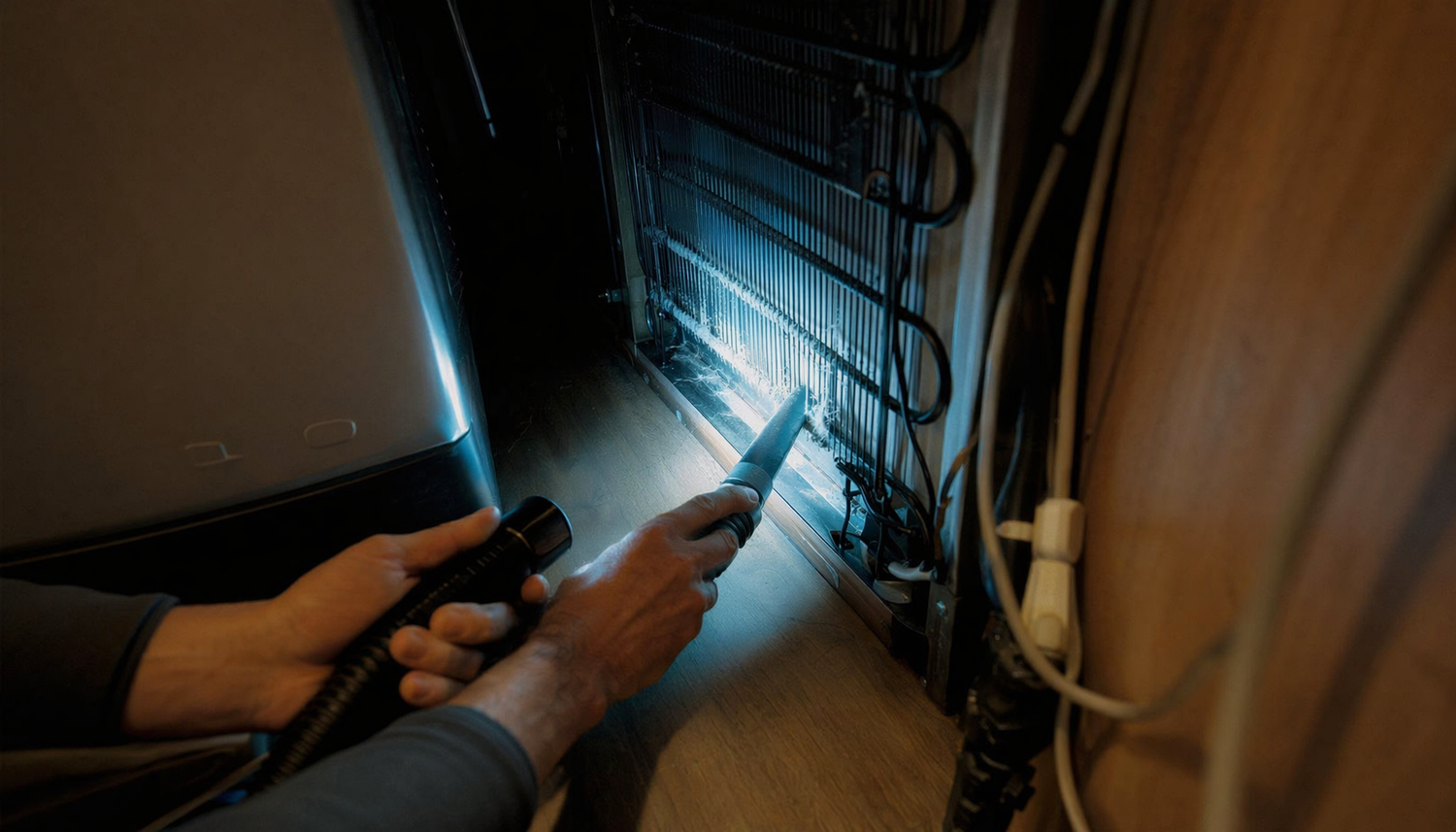
Cleaning condenser coils in a tight space is mostly about three things: cut power, create enough access to work gently, and remove dust without crushing fins or soaking wiring. For a portable refrigerator, car refrigerator, beverage cooler, or compact wine cooler, that simple maintenance step can help restore airflow and reduce unnecessary compressor run time.
If your portable fridge seems warm around the cabinet, runs longer than usual, or struggles after a dusty road trip, the condenser area is one of the first places to check. A careful cleaning usually takes less time than troubleshooting spoiled drinks or temperature swings later. What follows is a practical, space-aware method you can use at home, in an RV, in a garage beverage setup, or in a light-duty service area.
Why Tight-Space Coil Cleaning Matters

When dust settles on condenser fins and around the fan, airflow and heat transfer drop. In a compact appliance, that matters even more because portable refrigerators and beverage coolers already work with smaller air passages and tighter cabinet clearances than many full-size units.
A dirty condenser does not just look messy. It can make the compressor run longer, increase component strain, and waste power. That is relevant whether you are cooling meal prep in a portable refrigerator, stocking drinks in a beverage cooler, or keeping a few bottles stable in a compact wine cooler. In everyday use, the symptom is usually simple: the unit still cools, but it takes longer, feels hotter around the vented area, or cycles more often.
Field guidance for refrigeration systems also treats portable equipment like any other condenser-based setup: inspect the fan blades, intake, and accessible coils. In a car refrigerator or travel cooler, that is especially important after beach trips, camping, pet transport, or trunk storage where lint and road dust collect fast.
Know When Your Appliance Actually Needs It

Not every modern refrigerator needs frequent coil cleaning, but compact units in dusty, enclosed, or mobile environments often do. A portable refrigerator riding in an SUV cargo area, a beverage cooler tucked under a counter, or a wine cooler pushed tight against a wall faces more airflow restrictions than a unit sitting out in the open.
Practical signs are more useful than guessing by calendar alone. Check the condenser area if you notice hotter cabinet sides near the vent, more frequent compressor noise, longer pull-down time after loading warm drinks, or unstable temperatures during hot weather. For food safety, that matters because a portable fridge that struggles to reject heat may take longer to bring perishable items back under safe storage temperatures after the lid or door is opened.
Cleaning schedule depends on use. A lightly used indoor beverage cooler may only need inspection every six months and cleaning about once a year. A car refrigerator used on road trips, tailgates, or dusty job sites may need a quick inspection monthly during heavy season. If pets, garage dust, grease, or outdoor travel are part of the routine, more frequent checks are usually worth it.
Tools That Work Better in Cramped Installations

The safest approach in a compact cabinet is usually a narrow vacuum tool, a long flexible coil brush, a soft detailing brush, a flashlight, and a screwdriver if a panel or grille needs to come off. Those tools let you work around wiring and fan guards without scraping the coil surface or bending delicate aluminum fins.
For tight spaces, gentle dry cleaning is usually the first choice. Research and maintenance guidance consistently show that dust buildup restricts airflow through coils, so the goal is to lift lint and fine debris away rather than grind it deeper into the fin pack. A low-suction vacuum with a crevice attachment is safer than aggressive compressed air in a crowded cabinet because it gives you more control over where debris goes.
Water has a place, but only in the right design and with clear access. Coil-washing research exists, yet the available evidence does not support treating every compact appliance like an outdoor condenser. In a portable refrigerator or wine cooler with close electrical parts, fan wiring, and foam insulation nearby, dry removal first and only minimal moisture when the manufacturer allows it is the lower-risk approach.
Step-by-Step: Cleaning Coils When There Is Barely Room to Reach Them

Start by shutting the unit off completely. Unplug it from the wall, disconnect the 12V cord if it is a car refrigerator, and remove any detachable battery pack if your model has one. If the cleaning will take more than a few minutes, move food, milk, or meat to another cold space, and place wine or canned drinks in a cooler so the cabinet can stay open without creating a temperature-management problem.
Next, create working room instead of forcing your hands into the gap. Pull the appliance straight out if possible, or slide it just far enough to reach the vented side, rear panel, or lower grille. If the appliance is built into a small cabinet, remove the grille or service panel first and use a flashlight to identify the coil, the fan, and any wiring harnesses before you touch anything.
Then clean in stages. Vacuum loose dust first. Use the coil brush with light back-and-forth passes that follow the direction of the fins instead of crossing them. Brush a small section, vacuum again, and repeat until the lint stops coming off. If the fan blades or intake screen are dusty, wipe or brush those too, because restricted intake can hurt performance even if the coil itself is only mildly dirty. Guidance for condenser cleaning also stresses power-off safety, gloves, eye protection, and gentle handling of fragile fins.
A simple workflow for compact units
- Turn off all power sources and open the access area.
- Use a flashlight to locate the coil, fan, intake, and wire routing.
- Vacuum large lint first with a narrow attachment.
- Loosen remaining debris with a flexible coil brush or soft brush.
- Vacuum again until the fin surface and nearby compartment look clear.
- Reinstall panels securely and restore power.
What to avoid
- Do not use a pressure washer or strong compressed air blast in a small appliance cabinet.
- Do not jab a screwdriver, metal pick, or stiff scraper into the fins.
- Do not spray degreaser directly onto wiring, controls, or fan motors.
- Do not run the unit with the access panel removed unless the design specifically allows it.
After-Cleaning Checks for Cooling, Power, and Food Safety

Once the panel is back on and power is restored, let the unit run and listen for normal airflow. You are checking for three things: the fan is unobstructed, the compressor sound is steady rather than strained, and the cabinet starts moving toward its set temperature without constant short cycling.
A clean coil will not fix every cooling issue, but it can improve the conditions the sealed system works under. In one study summarized by a university, coil cleaning improved airflow and cooling performance, which is why routine maintenance is often a better first step than assuming a refrigerant problem. For a beverage cooler, that may show up as faster recovery after loading room-temperature cans. For a wine cooler, it may show up as steadier cabinet temperature in a warm room. For a portable fridge in a vehicle, it may mean less battery draw caused by unnecessary long run cycles.
Food safety still depends on what the thermostat and the real cabinet temperature do after cleaning. If you store perishable food, confirm the interior returns to a proper cold range with a fridge thermometer rather than trusting the display alone. Drinks are more forgiving than raw food, so a beverage-only setup gives you more margin than a travel fridge carrying meat, dairy, or baby food.
Ventilation and Placement Matter as Much as Cleaning

A clean condenser cannot do much if the appliance has nowhere to dump heat. Portable refrigeration best practices include checking the condenser intake and accessible coil area for debris and restricted airflow, but the surrounding space matters too. If a portable refrigerator is wedged against blankets in an SUV, or a beverage cooler is boxed in by cabinetry and cases of soda, the heat stays trapped around the cabinet.
That is why spacing and orientation should be part of daily care. Keep vents clear of tote bags, cardboard, pet hair, and soft goods. In a car refrigerator, avoid draping jackets over the vent side and do not let charging cables or cargo nets block the fan path. In a small apartment or office beverage setup, leave the clearances the manufacturer calls for and vacuum the floor area nearby so dust is less likely to be pulled back into the condenser.
If your unit still runs unusually hot after cleaning and improving clearance, the issue may be beyond routine maintenance. Bent fins, a failing fan motor, damaged wiring, a weak compressor, or a thermostat problem can all imitate a dirty-coil symptom. That is the point where service is smarter than repeated cleaning.
FAQ
Q: Can I clean a portable refrigerator condenser coil without moving the appliance far from the wall? A: Yes, if the access panel or vent area gives enough room to work safely with a flashlight, narrow vacuum tool, and flexible coil brush. If you cannot clearly see the coil and fan, move the unit farther out rather than cleaning by feel and risking bent fins or damaged wires.
Q: Is compressed air safe for a car refrigerator or beverage cooler coil? A: Usually only with caution. In very tight cabinets, compressed air can push dust deeper into the compartment or blow debris into the fan motor and controls. A low-suction vacuum plus a soft brush is easier to control for most owners.
Q: How often should I clean the coils on a portable fridge used for drinks and travel? A: Inspect monthly during heavy travel or dusty-season use, and clean when you see visible lint, reduced airflow, or longer cooling times. For lighter indoor use, checking every six months and cleaning about once a year is a practical baseline.
Practical Next Steps
If you remember only one rule, make it this: clean the condenser area before the unit starts showing real cooling trouble. For portable refrigerators, car refrigerators, beverage coolers, and compact wine coolers in tight spaces, the best routine is simple: keep vents open, inspect the intake and fan regularly, remove dust gently, and verify the cabinet returns to its target temperature afterward.
That approach is practical for home entertaining, road travel, apartment living, and light-duty business use because it protects airflow without turning basic maintenance into a repair project. When the coil is clean but temperatures still drift, move quickly to deeper diagnosis so power use, food safety, and compressor wear do not get worse.


Commenta
Questo sito è protetto da hCaptcha e applica le Norme sulla privacy e i Termini di servizio di hCaptcha.