
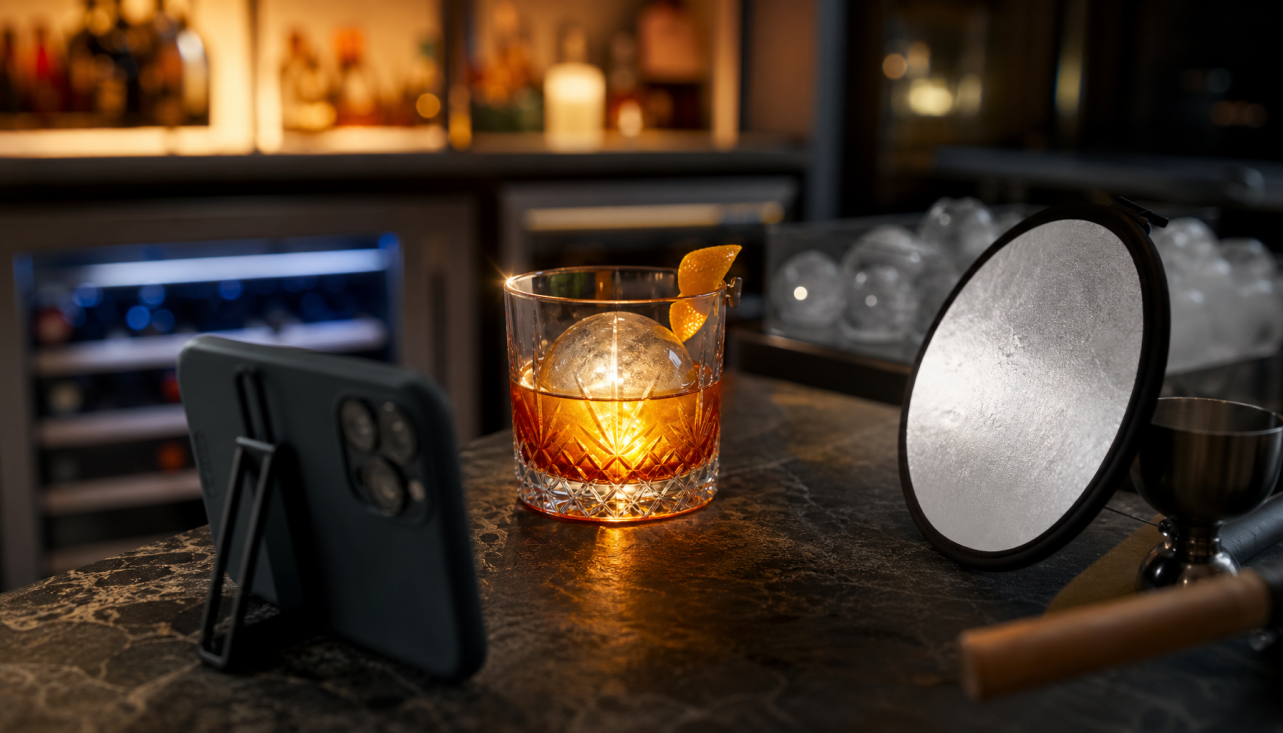
Sphere ice changed home cocktail photography by making drinks look cleaner, more intentional, and easier to keep camera-ready for a few extra minutes. The real shift was not just style; it was better control over clarity, melt, and dilution in a home setup.
If your cocktail photos keep turning from crisp to messy before you finish framing, the ice is usually part of the problem. Large-format sphere ice became the home standard because it gives a polished look, slows visible breakdown compared with small or cracked cubes, and works better when the drink, glass, and garnish are pre-chilled. What follows is a practical way to decide when sphere ice is worth the effort, what appliances support it recommended, and when another ice format is the smarter choice.
Why Sphere Ice Looks More Professional on Camera

Sphere ice is presented as both practical and visual, which explains why it became a default styling cue in Old Fashioneds, Negronis, and neat pours at home. A single round piece reads as deliberate in a glass: fewer harsh edges, less visual clutter, and a stronger focal point around the drink’s color, garnish, and reflections.
Clear ice’s value is estimated to be mostly aesthetic, but that does not make it superficial. In photography, aesthetics are the job. Clear sphere ice lets backlight travel through the drink more evenly than cloudy tray ice, which helps amber spirits, diluted stirred cocktails, and citrus drinks keep their color separation instead of turning milky or gray in the glass.
Clarity matters more than most home bars expect
Directional freezing reduces trapped cloudiness, so the ice looks cleaner and less fractured. That matters in close-up shots because bubbles and cloudy centers catch light unpredictably, making the drink look rough even when the recipe is solid.
Cold-drink photography works especially well with backlight or back-side light, and clear ice supports that lighting better than opaque freezer cubes. For a home photographer, that means less time fighting glare in editing and more usable frames before the ice starts to soften.
The Science Behind the Standard: Shape, Melt, and Dilution

A sphere has the lowest surface-area-to-volume ratio, which is the main scientific reason it became the “higher-end” shape. Less exposed area for the same mass means slower melting than many small cubes or shards, so the drink stays visually stable longer during styling.
Melting energy scales with ice mass, while heat transfer scales with surface area. In practice, that means one large sphere or cube usually outlasts a handful of smaller pieces, especially once the drink has already been pre-chilled in a beverage refrigerator or rapid chiller.
Slower melt does not mean magical performance
A bourbon test comparing one sphere with five cubes found that cubes cooled faster and lower, while the sphere melted more slowly and diluted less. That trade-off matters for photography: if the liquid is still warm, a sphere may look better but will spend more of its life doing cooling work instead of holding its shape.
A controlled whiskey test found only a small dilution difference between a large cube, clear cube, and clear sphere. The useful takeaway is that size and starting temperature often matter more than chasing perfection in shape. For home use, a 2-inch cube and a 2- to 2.5-inch sphere are both strong hero-ice choices when the drink is already cold.
The Home Appliance Setup That Makes Sphere Ice Practical

Dedicated drink fridges help with temperature control and free up space, which is a direct advantage for cocktail photography. Pre-chilling spirits, mixers, glassware, and garnishes means your sphere is no longer asked to drag a room-temperature drink down from the mid-70s°F before the shot even starts.
Rapid beverage chillers can take a drink from 77°F to 43°F in as little as 1 minute for cans and 3.5 minutes for bottles. That type of appliance is useful when you are shooting multiple drinks in one session, working in a warm kitchen, or styling at a temporary location where your main refrigerator is already full.
Where portable and countertop ice makers fit in
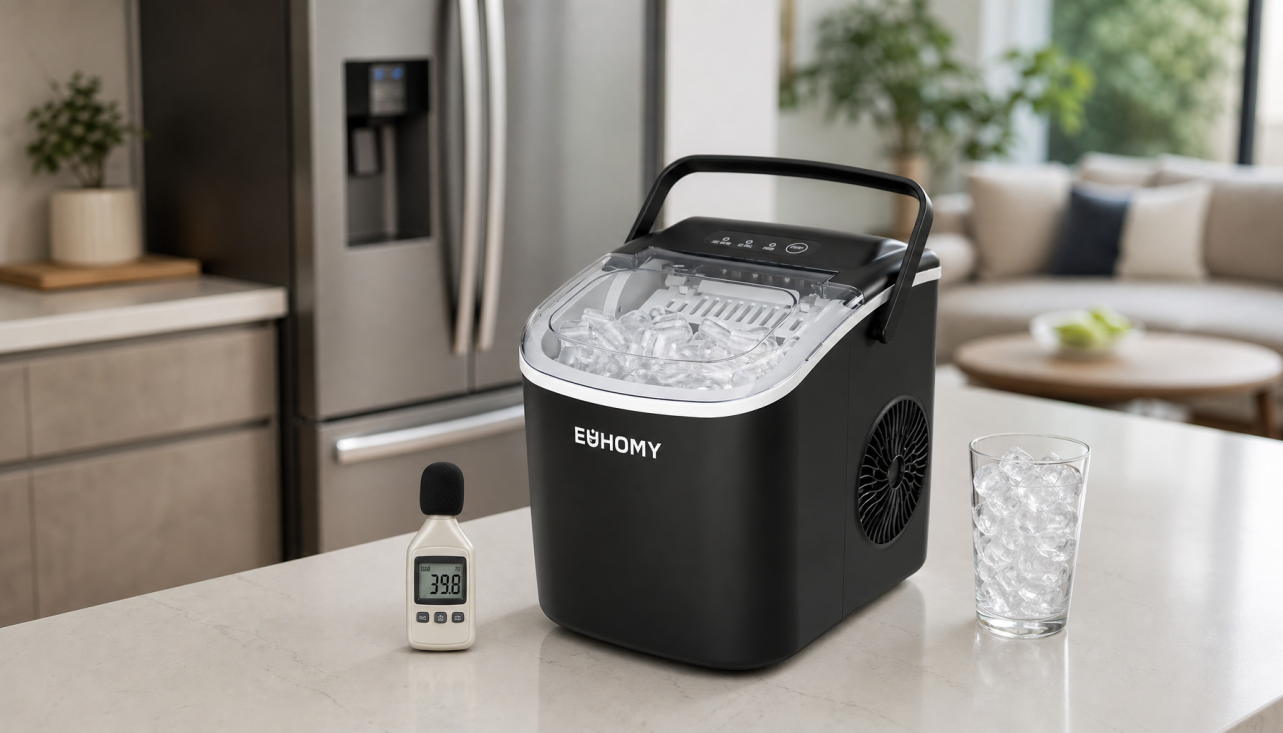
Countertop nugget ice makers are valued for soft, chewable ice and fast household output, but nugget ice is not the hero for a close-up whiskey shot. It is better for packing a staging bucket, chilling a shaker tin, filling a casual soft drink, or supporting a second scene where texture matters more than a clean glass silhouette.
Bullet-ice countertop machines can start making ice within minutes, which makes them useful for overflow demand, travel shoots, tailgates, or light event work. The trade-off is that fast countertop ice is usually about convenience, not photographic refinement. For the final hero glass, a separate clear sphere workflow still gives a stronger result.
A practical Euhomy-style workflow
A realistic home setup is simple: keep bottles and mixers in a beverage refrigerator set within the common 34°F to 50°F range, use a countertop ice maker for service ice, and reserve a few clear spheres for the featured drinks. That division of labor is what changed the standard. Home bars no longer need every cube to be ideal; they need the right ice in the right role.
For light-business use, such as a small content studio, tasting room, or short rental event bar, the same logic scales well. Use high-output machine ice for chilling and backup, then deploy sphere or large clear cube ice only when the camera is up and the drink is final.
How to Make and Hold Photo-Ready Sphere Ice at Home

Clear sphere ice depends on directional freezing, which is why standard trays often disappoint. A regular tray freezes from multiple directions, traps bubbles, and creates the cloudy center that looks weak on camera.
A small cooler directional-freeze method can produce clear ice in about 18 to 20 hours. That is still one of the most practical at-home workflows because it is inexpensive, repeatable, and does not require distilled water. Filtered tap water is often enough unless your water is visibly cloudy.
Storage is where good ice often gets ruined
Ice storage matters for clean taste, transport, and keeping ice colder longer. Sphere ice should be kept covered and separated from strong freezer odors, because ice absorbs smells quickly. Silicone and metal containers are usually the most practical home options, while cracked plastic bins and loose freezer bags are more likely to damage the finish or add off-odors.
A good routine is to make spheres a day or two before the shoot, move them into a clean covered container, and only pull one or two at a time to the set. For small apartments or shared kitchens, a secondary cooler or a dedicated freezer zone is often more useful than making larger batches.
When Sphere Ice Is the Right Choice, and When It Is Not

Large cubes and spheres are well suited for spirit-forward drinks or slow sipping. That makes sphere ice ideal for Old Fashioneds, whiskey pours, Negronis, and other drinks where the glass is part of the visual story and the drink is not supposed to change quickly.
Sphere ice molds are often preferred at 2.5 inches over 2 inches because the larger size has more volume and melts more slowly. If your glassware can hold it comfortably, the larger sphere usually gives more styling time and a stronger luxury cue in the frame.
Better alternatives for other drinks
Nugget ice is the right choice when chewable texture is part of the drinking experience, such as fountain-style soft drinks, some iced coffees, or casual mixed drinks. It is pleasant to drink and packs tightly into a glass, but it is not the right choice when you need a long, clean hero shot because its many small pieces change the drink’s look quickly.
Crushed, pebble, or shaved ice is better for tiki drinks, juleps, frozen presentations, and any composition where frost, mound height, or garnish support is the point. In those cases, fast dilution and visible texture are features, not flaws. Sphere ice raised the standard for one category of cocktail image, not for every cold drink.
FAQ
Q: Does sphere ice always melt slower than a large cube?
A: Not by a dramatic margin in every home test. A sphere has a theoretical surface-area advantage, but once you compare it with a single large cube instead of many small cubes, the difference gets smaller. For most home photographers, pre-chilling the drink and using any large-format clear ice matters more than obsessing over sphere versus cube.
Q: Do I need a countertop ice maker to shoot better cocktail photos?
A: No. A sphere mold or directional-freeze setup is enough for the hero drink. A countertop ice maker becomes useful when you need backup ice for chilling tins, keeping props cold, serving guests, or shooting several rounds in one session.
Q: Is clear ice mainly about looks, or does it change the drink too?
A: Mostly looks, but looks are important in photography. Clear ice can also be denser and less fragile than cloudy ice, so it may hold up a bit better. The larger practical gain is that it makes the drink easier to light and keeps the glass from looking muddy in close-up shots.
Final Takeaway
Sphere ice changed home cocktail photography because it solved two visible problems at once: messy-looking freezer ice and drinks that lost structure too quickly under lights. The strong results come from treating sphere ice as part of a system, not a standalone trick: pre-chill bottles in a beverage refrigerator, use portable or countertop machine ice for support work, store clear spheres carefully, and save the right piece for the final glass. For most home setups, that is the point where photos start looking less homemade and more publishable.
References
- Jeffrey Morgenthaler: Ice: How Much Does Shape and Clarity Really Matter?
- Why does more ice melt slower than less ice?
- How Ice Obsessives Brought Clear Cubes to the Home Bar
- How to Store Cocktail Ice
- How to Make Crystal Clear Ice Cubes & Balls
- 10 tips for photographing cold drinks
- Surface-Area-to-Volume Ratio of Ice Cubes
- Recommended Countertop Ice Maker for Fancy Cocktails & Chilled Drinks
- The 8 Recommended Kitchen Countertop Ice Makers of 2026
- The 9 recommended Beverage Fridges of 2026
- The 7 recommended Sphere Ice Molds of 2026

Commenta
Questo sito è protetto da hCaptcha e applica le Norme sulla privacy e i Termini di servizio di hCaptcha.