

You want ice on demand without juggling trays or last-minute store runs, yet you also care about power bills, noise, and hygiene. Here is a clear, practical answer built around how home ice maker machines work and how households actually use them. You will see when 24/7 running makes sense, what it costs, how to keep ice clean, and how to bring production back when it slows.
How Home Ice Makers Work
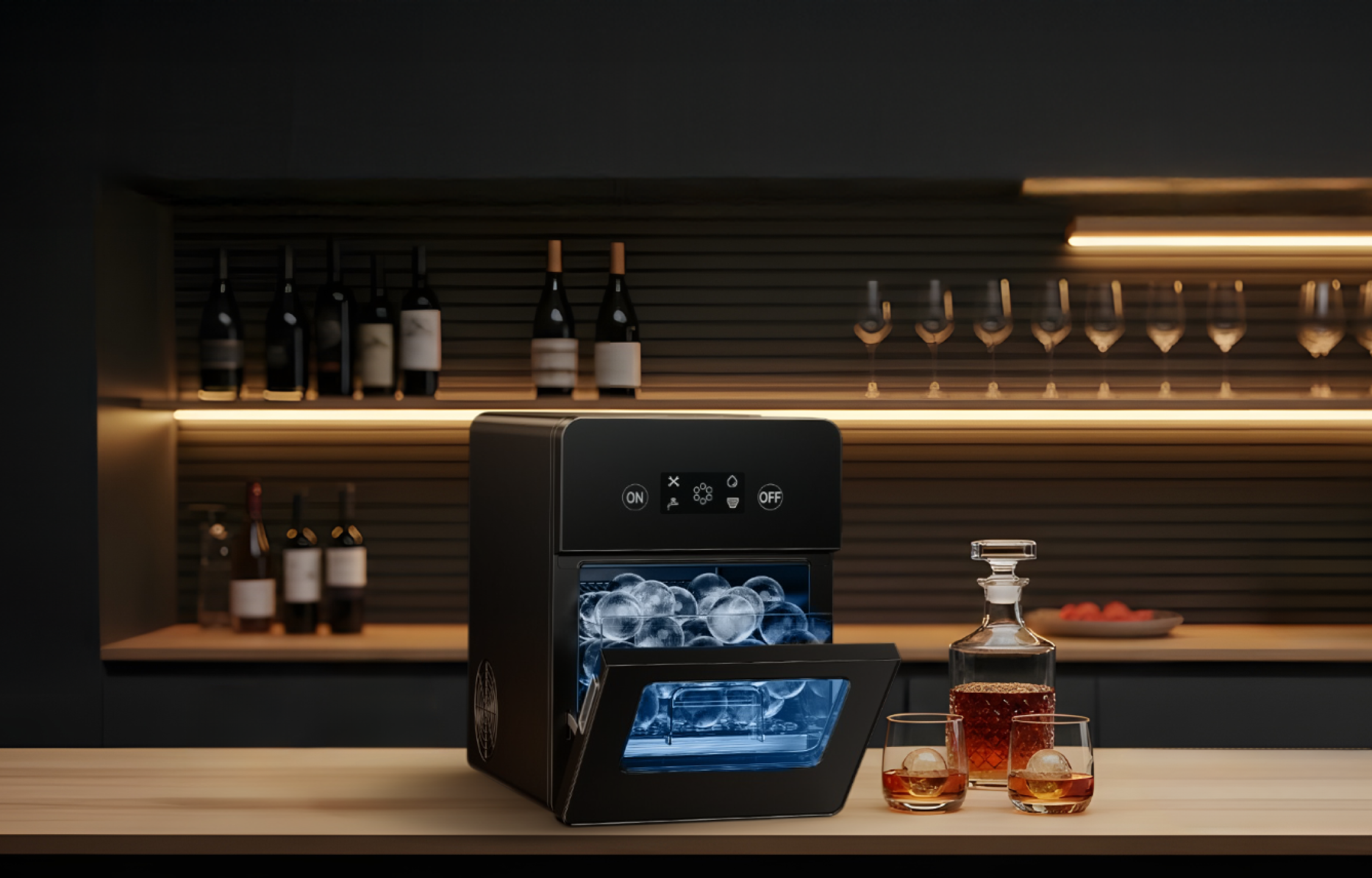
Most home ice maker machines draw water from a small reservoir, move it across a chilled surface, and then release finished ice into a bin. One common approach freezes water on cold prongs or a metal mold, then warms that surface briefly so cubes drop into the basket. Another approach produces nugget ice. Water forms a thin layer inside a refrigerated cylinder, an auger scrapes the ice into flakes, and the flakes compress into chewable pellets with a soft bite.
A design detail explains everyday storage limits. The bin on compact machines is insulated, yet it is not a freezer. Ice that sits for long periods melts and returns to the reservoir, then the unit recycles that water into a fresh batch. Anyone who needs to hold ice for hours should move it to the kitchen freezer. Treat the bin as a staging area rather than long-term storage, and the results stay consistent. Understanding these core mechanisms helps users optimize their ice production cycles.
Is It Safe to Leave a Portable Ice Maker On 24/7?
Yes, it can be safe to leave home ice maker machines running when you actually need a constant supply, provided basic operating conditions are met. Portable units are designed for continuous cycling inside an indoor temperature range that commonly spans about 50 to 100 or 105 °F. They also need open space around the cabinet so the condenser can shed heat. Keep at least 5 to 6 inches of clearance on the sides and back, and avoid hot zones near stoves or direct sun. If the room runs outside the stated range, production slows and the compressor works harder, so give the machine a rest until conditions improve.

Usage pattern matters. If your household drinks iced beverages throughout the day, continuous running avoids repeated warm-up delays. If you expect a quiet night or will be away for a day, switch the portable ice maker off, drain the tank, and let the interior dry. Replace the water when you restart to keep the taste clean.
Continuous Operation Benefits for Countertop Models
When demand stays high, leaving home ice maker machines on gives a predictable output. Once the evaporator stabilizes, batches arrive on a steady rhythm that suits a busy kitchen, a home coffee station, or game night with friends. There is less waiting for the first batch, which often feels slow right after a cold start.
Water turnover helps taste and clarity. Melted ice returns to the reservoir, so fresh water and regular cleaning matter. If you manage the schedule and place the unit where it can breathe, an ice maker machine countertop earns its convenience during peak hours. Transfer finished ice to your freezer when you need to hold it, then let the machine refill the bin while you entertain.
24/7 Power Use and Operating Cost
Energy questions often decide the on or off choice for home ice maker machines. Rated power for small countertop models commonly falls in the 120 to 230-watt range, with many listing figures around 120 to 150 watts. Actual consumption depends on ambient temperature, water temperature, and the duty cycle. A simple worksheet helps you plan costs, then a plug-in meter can confirm the number for your home.
| What to plug in | Example |
| Rated power (watts) | 150 W |
| Hours actively freezing per day | 12 h |
| Daily energy | 150 W × 12 h = 1.8 kWh |
| Electricity rate | $0.17 per kWh |
| Daily cost | 1.8 × 0.17 = $0.31 |
| Monthly cost (30 days) | ~$9.30 |
Positioning affects the duty cycle. Keep the unit in a cooler spot, give it room to move air, and keep the lid closed during freezing. Those small choices shorten run time and reduce noise without hurting output.
Noise in 24/7 Use and How to Reduce It
Continuous operation means moving air across coils and a brief click when each batch releases. With a few placement habits, home ice maker machines remain comfortable to live with. Put the unit on a solid, level counter. Hollow or flexible surfaces amplify vibration, while a thin silicone mat damps drumming on stone or metal. Leave 5 to 6 inches of clearance around vents so the fan does not strain against blocked airflow. Keep the machine out of direct sunlight and away from cooking appliances, since extra heat extends fan time and compressor cycles.
If you live in a studio or open plan, time production to match activity. Run the machine during meal prep or early evening, then switch it off when quiet matters. The bin will refill quickly the next day, while the kitchen is already lively.
How to Clean During Continuous Use
Regular cleaning keeps home ice maker machines efficient and the ice tastes fresh. Follow these essentials and adjust frequency to your water hardness and actual use.
- Refresh the water daily. Empty and refill the reservoir every 24 hours during active use.
- Weekly quick clean. Wipe the bin, lid, scoop, and gasket. If your model includes a self-clean or rinse program, run one cycle and discard the first batch.
- Descale as needed. Use diluted citric acid or a food-safe cleaner, flush thoroughly, then discard the first post-clean batch. Increase frequency in hard-water areas.
- Keep airflow clear. Vacuum the condenser intake and louvers, and leave 5 to 6 inches of open space around vents to reduce heat and cycle time.
- After cleaning or pauses. Power off for a few minutes before restarting, refill with fresh water, and discard the first batch. If pausing for a day or longer, drain and dry with the lid open.
Practical Tips for Restoring Ice, Extending Lifespan, and On/Off Decisions
Use this section when output dips, when an ice maker stopps making ice, or when you want a longer, quieter life from the unit you already own. A short checklist solves most cases quickly.
Recover production when ice slows or stalls. Confirm water level, then refill with cool tap or filtered water. Check the room temperature against the stated operating range and move the unit if the kitchen is too hot. Open space around the cabinet by several inches. Rinse the pump screen or inlet filter if present. Run a cleaning or descaling cycle and flush thoroughly. Switch the machine off for several minutes, then restart so internal pressures can settle.
Protect lifespan with steady habits. Avoid rapid power cycling. Keep the lid closed during freezing so warm room air does not speed up melting in the bin. Use filtered water in hard-water regions and plan more frequent descaling when scale spots appear on finished ice. Transfer finished ice to your freezer when you need storage, since the bin only insulates.
Choose an on or off rhythm that fits your demand. Leave the machine on during busy days, events, or steady household use. Turn it off for low-demand periods, overnight in noise-sensitive spaces, or before travel. For pauses of a day or more, drain and dry. On return, refill with fresh water and discard the first batch.
Set a Smarter On/Off Routine for Home Ice Makers
Match the machine to your routine, and the results improve immediately. If ice appears at most meals or you host guests frequently, let the unit run during the hours you are home, then top off the freezer with finished cubes. Keep a wide breathing space around the cabinet, aim for a room temperature inside the stated operating range, and replace the reservoir water every 24 hours during use. If your household uses only a few handfuls on most days, turn the machine on one to two hours before you need ice, move the filled bin to the freezer, then power down. That rhythm trims energy and noise, slows mineral buildup, and still covers daily drinks. Shoppers comparing the best home ice makers often focus on capacity, yet the bigger win comes from dialing in placement, cleaning cadence, and the on or off routine that matches real demand.

Frequently Asked Questions About Running Ice Makers 24/7
Q1: Is it sensible to keep a countertop ice maker on all day?
It is reasonable for households with steady daily demand, as long as the room stays within the recommended temperature range and the unit has space to vent heat. For light demand, make ice ahead of peak times, move it to the freezer, and let the machine rest to save energy and fan wear.
Q2: How do I estimate the monthly electricity cost if it runs nonstop?
Use the simple equation: kWh per day = (watts × hours × duty cycle) ÷ 1000, then multiply by your utility rate. Duty cycle depends on room temperature and how often the compressor runs. For a precise number at home, track a typical week with a plug-in energy meter.
Q3: What setup improves efficiency during continuous operation?
Leave at least 5–6 inches of open space on the sides and back, keep the unit level, and avoid hot zones near ovens or direct sun. Clear the rear vents so the air moves freely. Cooler, well-ventilated placement shortens freeze cycles and lowers both noise and energy use.
Q4: How often should I refresh water and ice with 24/7 use?
Replace the reservoir water every 24 hours during active use and wipe the bin daily. Stale water and dissolved minerals dull the flavor over time. A simple carbon filter upstream improves taste and slows scale, which helps the machine keep steady output.
Q5: Can I use a smart plug or timer to automate on/off cycles?
Yes, if the unit supports auto-resume after power restoration and the manual does not prohibit it. Test by unplugging while running and reconnecting to confirm resume behavior. Use a plug rated for the machine's amperage, avoid undersized extension cords, and prefer GFCI-protected outlets in wet areas.


Leave a comment
All comments are moderated before being published.
This site is protected by hCaptcha and the hCaptcha Privacy Policy and Terms of Service apply.