
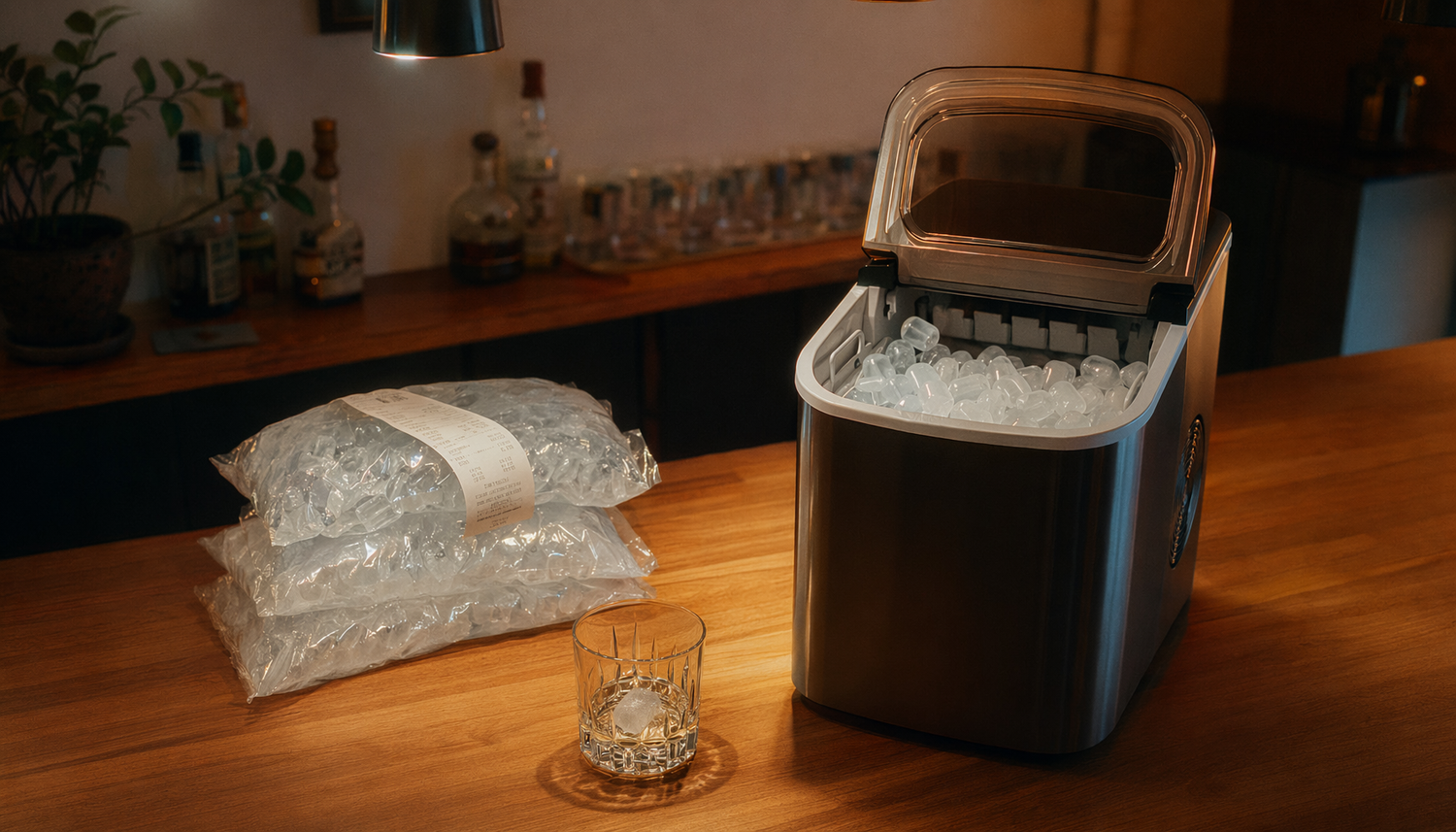
For many home bars, repeated bagged-ice runs can easily add up to $20 to $100+ per month, while a portable ice maker may operate for only a few dollars in electricity if your usage is steady and your expectations match the machine’s output.
If you have ever opened the freezer before guests arrive and realized there is barely enough ice for the first round, the real cost is not just the bag price at the store. It is also the extra trips, the melted leftovers, and the scramble to keep drinks cold without taking over your whole kitchen. This guide will help you estimate your real monthly ice spend, compare bagged ice with portable ice maker ownership, and plan a setup that fits a home bar, weekend travel, or light entertaining.
Start With Your Real Monthly Ice Habit
The fastest way to estimate cost is to stop thinking in “bags” and start thinking in occasions. A quiet home bar that serves a few cocktails on Friday and Saturday might use far less ice than a setup that handles mixed drinks, iced coffee, mocktails, and a few small parties every month.
A practical planning method is: - Count how many drinks usually need ice each week - Add extra ice for chilling bottles, shaking cocktails, or filling a cooler - Multiply that by four weeks - Compare that total with the price of a bag in your area
For example, if your home bar goes through three 7 lb bags per week at $3.99 each, that is about $47.88 per month. If you buy five bags per week during summer hosting season, the same math jumps to $79.80 per month. That is why frequent buyers often underestimate their spend: the purchase feels small each time, but the monthly total is not.
Where Bagged Ice Costs Usually Creep Up
The bag price is only the starting point. Waste matters too. Ice bought for a party often melts in a cooler, picks up odors in an overstuffed freezer, or gets discarded after sitting in questionable conditions.
Packaged ice is regulated as a food, which is helpful for buyers who want a straightforward, ready-to-use option. But once the bag gets home, your storage habits determine how much of that purchase actually ends up in drinks rather than in the sink.
A Simple Home-Bar Budget Range
If you want a quick rule of thumb, use these monthly ranges: - Light use: $15 to $30 per month - Moderate use: $30 to $60 per month - Frequent entertaining: $60 to $120+ per month
Those are planning ranges, not universal averages. The right number depends on your local bag price, how often you serve ice-heavy drinks, and whether you also use ice for coolers, patios, RV trips, or tailgates.
Bagged Ice vs. Portable Ice Maker: When the Math Starts to Shift

A portable countertop ice maker changes the cost structure. Instead of paying every time you need ice, you shift more of the expense to the upfront appliance price plus ongoing electricity, water, and cleaning time.
Typical countertop units for home use often make about 20 to 35 lb of ice per day under ideal conditions, with many common models landing around 26 to 28 lb per day. Batch times are usually around 7 to 15 minutes for bullet ice, but storage bins are much smaller than the daily production rating and often hold only around 2 lb at a time. That means these machines are good at keeping up with steady use, not storing a week’s worth of ice all at once.
A Break-Even Example
Here is a practical comparison for a moderate home bar:
- Bagged ice: 12 bags per month at $3.99 = $47.88 per month
- Portable ice maker purchase price: $50 to $200+ depending on type and features
- Electricity: often about $3 to $5 per month for light-to-moderate use, but more if the unit runs for long stretches daily
For a 170 W machine running about 4 hours per day, the energy use is roughly 0.68 kWh per day, or about 20 kWh per month. At $0.15 per kWh, that is about $3.00 per month. If your bagged-ice habit is already $40 to $80 monthly, the ownership math can become favorable fairly quickly.
When Buying Bags Still Makes More Sense
Bagged ice is still the simpler choice if you only host occasionally. If you buy a few bags for holiday weekends, beach days, or a once-a-month gathering, an appliance may save little money and add maintenance you do not really need.
It also matters what kind of ice you prefer. Standard portable units usually focus on speed and convenience. If you want slower-melting clear ice for cocktails or soft nugget-style ice, the machine price typically rises, and the cost comparison becomes less about pure savings and more about drink style and convenience.
What Ownership Really Costs Each Month
The realistic monthly cost of an ice maker is not just the electric bill. It includes three categories: energy, maintenance, and the cost of making more ice than you actually use.
For many home units in the 26 to 50 lb/day class, active power draw often falls around 120 to 170 W. In practical home use, that can translate to roughly 15 to 30 kWh per month for many countertop setups, or about $2.25 to $4.50 monthly at $0.15 per kWh. That is the appealing part of the ownership case: for steady home-bar use, electricity can be modest compared with repeated retail ice purchases.
Why Some Owners Spend More Than Expected
The monthly cost climbs when the machine runs longer than necessary, sits in a warm room, or keeps remaking melted ice. Many portable models do not keep finished ice fully frozen, so cubes can soften in the bin and cycle back into the reservoir. That is convenient, but it can also mean extra run time if you make ice too early or leave it sitting all day before guests arrive.
A few practical habits help control operating cost: - Choose a machine sized for your real weekly demand, not peak party demand alone - Run batches closer to when you will use the ice - Place the machine in a cool, ventilated indoor spot - Empty a full basket promptly instead of letting ice melt back down - Clean and descale on schedule so the unit does not work harder than it should
When a Larger Machine Can Pay Off
If your “home bar” is closer to a small event setup, a short-term rental space, or a light commercial entertaining area, a bigger machine may be worth considering. That does not automatically mean it is cheaper. Commercial-style machines can use far more electricity per day, so the return depends on volume.
The practical threshold is simple: if your ice demand is frequent, predictable, and large enough that retail bags require multiple weekly purchases, a higher-capacity machine can reduce trips and improve consistency. If demand is irregular, a smaller portable unit plus occasional bagged ice often keeps total cost lower.
Storage Setup Can Save or Waste Money

The cheapest ice is the ice you actually keep usable. Storage problems create hidden losses, especially for people who buy bags in advance and assume a freezer will handle the rest.
Guidance from a government agency for cold storage targets 40°F or below for refrigerators, and keeping a freezer cold enough for stable ice matters just as much in practice. If your freezer is overpacked, opened constantly, or shared with odor-heavy foods, your ice quality can drop even if the cubes technically remain frozen.
Best Use of Freezer Space, Beverage Coolers, and Backup Cold Storage
A standard kitchen freezer works well for backup storage, but only if you actually have the room. For frequent entertainers, this is where a beverage cooler, dedicated freezer space, or even a car refrigerator for travel days can improve the economics. The goal is not to make ice colder than necessary; it is to reduce melt, prevent odor pickup, and stop your kitchen freezer from becoming a bottleneck.
For example: - A portable ice maker can handle same-day production for cocktails - A freezer or secondary cold-storage appliance can hold transferred ice for later service - A beverage cooler can keep cans and mixers cold so you use less ice in each drink - A travel or vehicle cooling setup can support tailgates, cabins, or RV use without forcing a last-minute convenience-store stop
Plan for Parties, Outages, and Heat
Cold foods should stay at 40°F or below, and that matters when you use coolers, buffet setups, or patio drink stations. If you are serving outdoors, opening the cooler repeatedly for drinks warms everything faster, which is one reason separate beverage and food storage is often the smarter layout.
For backup planning, remember that a refrigerator typically stays cold for about 4 hours if unopened during a power outage, while freezer hold time depends on how full it is. If your bar setup depends on stored ice for events, outage planning matters more than most people expect.
Convenience Has a Cost, but So Does Poor Handling

People usually compare only “store bag” versus “machine price,” but convenience and handling standards also affect value. If you are buying ice often because it feels cleaner or easier, that can be reasonable. If you are making ice at home but storing or handling it poorly, the savings may not be worth the trade-off.
A public health agency investigation linked illnesses to ice handled in unsanitary conditions, which is a strong reminder that ice should be treated like food, not like a neutral accessory. The problem in that case was not simply the water source. It was the reused cooler, standing water, bare-hand contact, and lack of proper cleaning.
Practical Sanitation for a Home Bar
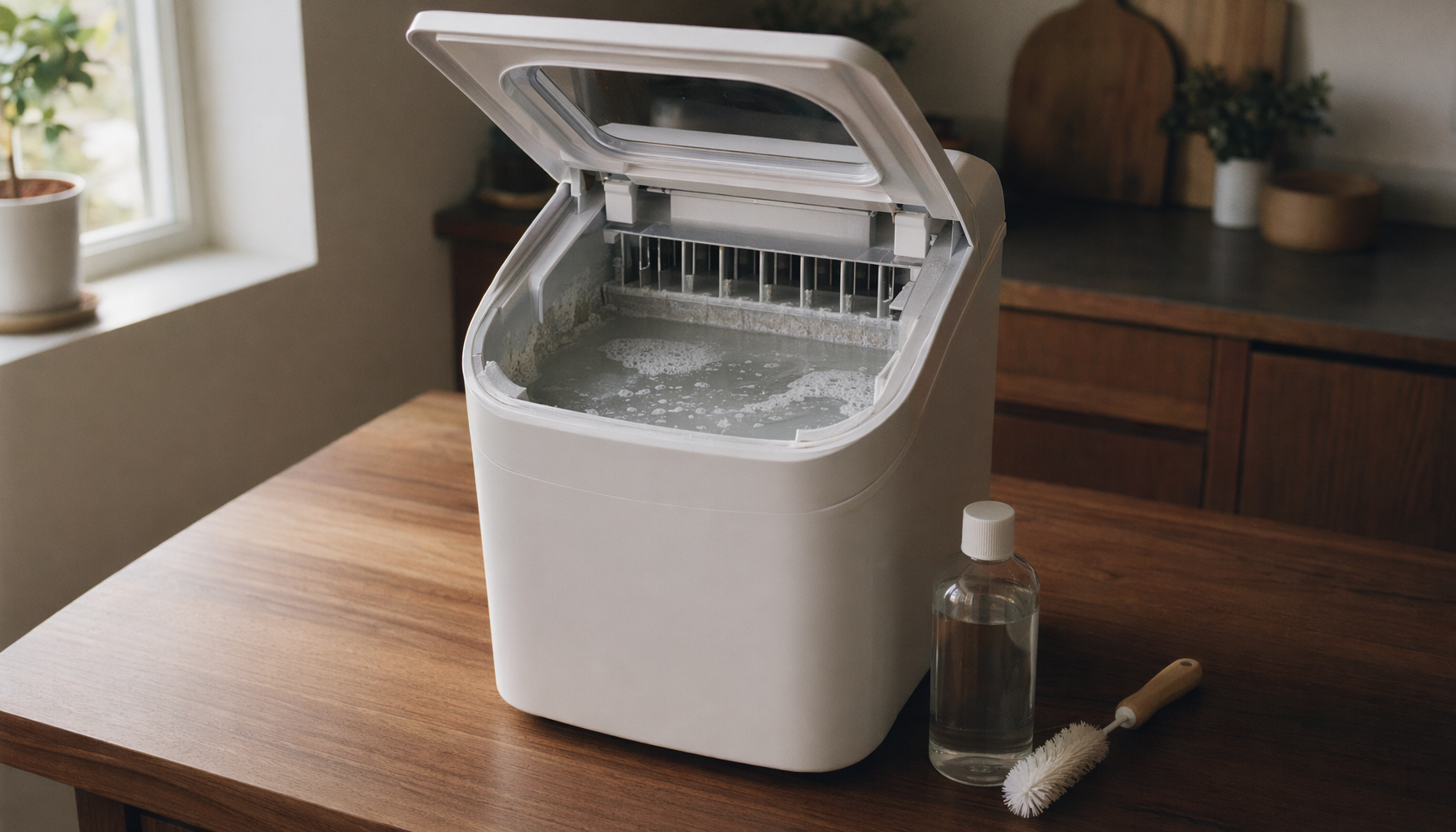
A safe routine is straightforward: - Clean the reservoir, scoop, and bin regularly - Avoid storing ice in containers not meant for food contact - Do not let meltwater sit for long periods - Use clean hands or a dedicated scoop instead of grabbing ice directly - Keep drink cans, garnishes, and raw foods separate from ice meant for consumption
Cross-contamination can happen through surfaces, containers, or direct handling, which is why a home bar should not treat cooler ice, service ice, and food-prep items as interchangeable. This matters even more if your bar setup doubles as an outdoor kitchen, grilling zone, or party station.
Quality Also Affects Perceived Value
The “best” ice is not just about shape. It is about whether the machine fits the drink experience you want. Fast bullet ice is practical for soda, mixed drinks, and casual hosting. Clear ice usually looks better in spirits-forward drinks and can hold texture longer. Nugget ice is popular for chewability and soft texture, but the machines tend to cost more.
That means the right buying decision is not only financial. It is also about whether your home bar values speed, appearance, texture, or backup volume.
FAQ
Q: How much ice does a typical home bar use in a month? A: A light-use home bar may only go through a few bags a month, while a busier setup that serves cocktails several nights a week can easily use 20 to 40 lb or more. The best estimate comes from counting your weekly drink occasions, adding party or cooler use, and multiplying by four.
Q: Is a portable ice maker cheaper than buying bagged ice? A: It often is for steady use. If you are spending $40 to $80 per month on bagged ice, a countertop machine with a modest electric cost may pay back its purchase price relatively quickly. If you only buy ice occasionally, the machine may not save much.
Q: Can I leave made ice sitting in the machine until I need it? A: Usually not for long-term storage. Many portable units do not keep finished ice fully frozen, so cubes can soften and melt in the bin. For better efficiency and drink quality, transfer finished ice to a freezer-safe container if you are making it ahead.
Practical Next Steps
If your home bar spends less than about $20 per month on ice, buying bags as needed is usually the simpler path. If you are regularly in the $40 to $80 range, a portable ice maker becomes easier to justify, especially when convenience-store runs and melted leftovers are part of the real cost.
For most households, the smart setup is not “all bagged ice” or “all appliance.” It is a small system: use a countertop ice maker for weekly demand, keep backup freezer space for parties, chill beverages separately so you use less ice, and follow basic clean, separate, cook, and chill food-safety practices. That approach keeps costs predictable, reduces waste, and gives your home bar a more reliable ice plan year-round.

Hinterlasse einen Kommentar
Diese Website ist durch hCaptcha geschützt und es gelten die allgemeinen Geschäftsbedingungen und Datenschutzbestimmungen von hCaptcha.