
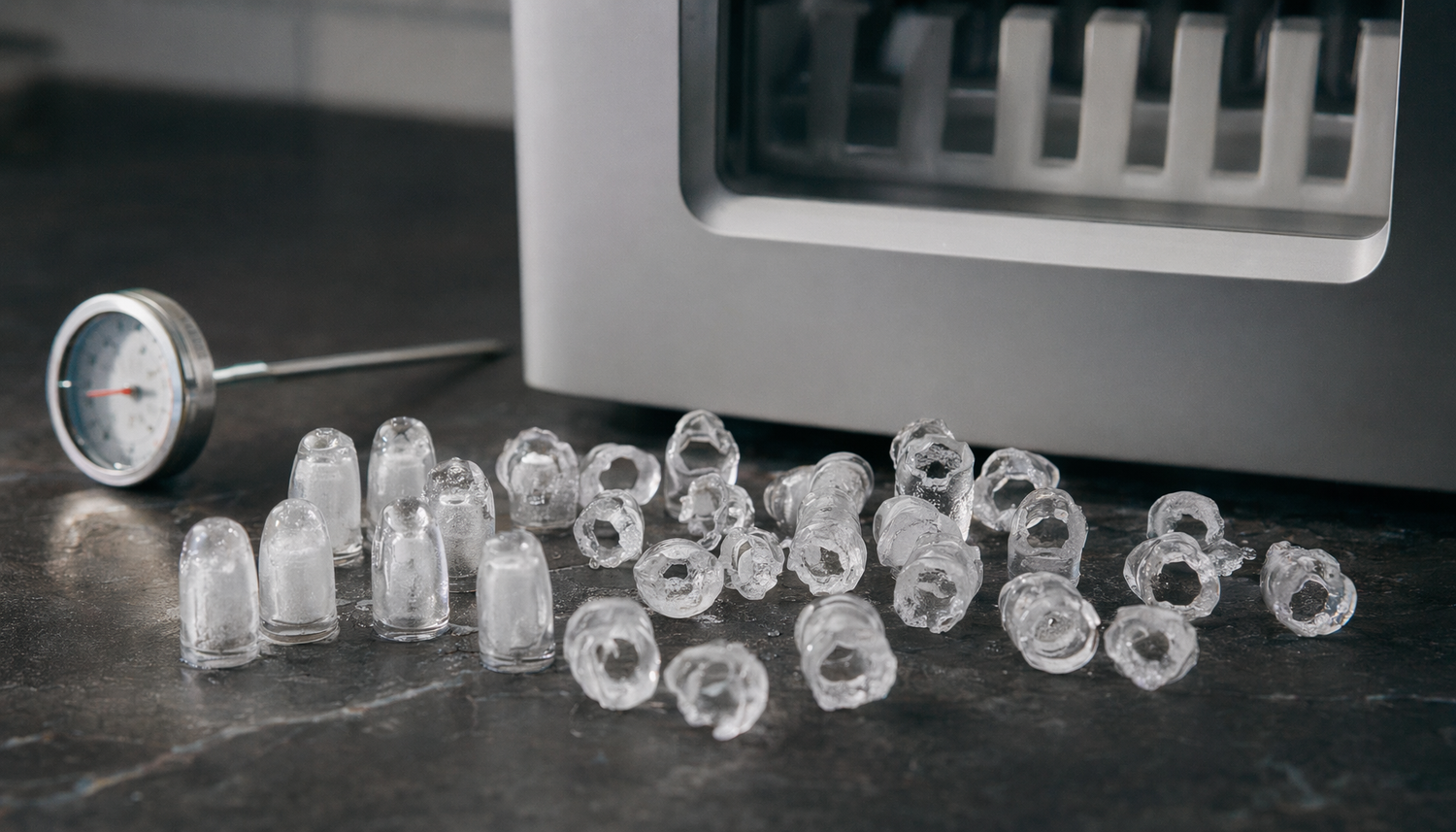
Hollow or partial ice cubes usually mean the machine is not getting the right amount of water at the right temperature during the freeze cycle.
If your portable ice maker suddenly starts dropping thin shells instead of solid cubes, or your office machine makes small, broken batches before a lunch rush, the problem is usually more practical than mysterious. In most cases, the fix comes down to water flow, freezer temperature, scale buildup, or a part that is cycling too early. You will be able to match the symptom to the likely cause, run a sensible troubleshooting sequence, and decide whether cleaning, a small repair, or replacement makes more sense.
What Hollow Ice Cubes Usually Mean

In most home, portable, and commercial-style machines, hollow cubes point to insufficient water fill during the freeze cycle. That can happen when a filter is restricted, a water line is kinked, mineral scale narrows internal passages, or an inlet valve does not stay open long enough. Hollow or small ice cubes usually result from incorrect freezer temperature or poor water flow, and poor water flow is the more common starting point when the cubes look thin, open in the middle, or inconsistent from batch to batch.
The exact shape tells you a lot. Thin-walled cubes or cubes with a hollow center usually mean the mold did not fill fully. Short, broken, or “capless” cubes often mean the machine started harvesting before the water had frozen all the way through. In a portable countertop unit, that may show up as bullet ice with thin walls; in a refrigerator or light-business unit, it may show up as undersized cubes that melt fast in drinks.
Use the machine type to narrow the diagnosis. A refrigerator ice maker often depends on a filter, a fill tube, and a freezer thermostat. A portable ice maker usually depends on a small reservoir, recirculation, and clean evaporator surfaces. A commercial machine adds longer water paths, more scale risk, and higher demand, so low fill problems can become obvious faster during heavy use.
Check Temperature Before You Assume a Part Has Failed

A machine can make hollow cubes even when the water system is fine if the freeze cycle is out of range. Automatic ice making equipment is covered by a sanitation standard, a sanitation-focused standard for ice intended for human consumption, but good ice quality still depends on normal operating conditions that day-to-day users control: stable temperature, airflow, and a machine that is level.
For refrigerator ice makers, the practical target is usually around 0°F. A freezer thermometer check after at least 12 hours helps confirm whether the compartment is actually at 0°F, which matters because cubes can eject too early if conditions are off. If your freezer is warmer than that, the center may not solidify before harvest. If it is excessively cold in a way that throws off the cycle timing, some machines can also produce hollow results.
Portable ice makers need a different version of the same check. They do not use a freezer compartment, but they still need reasonable room conditions and ventilation. If the machine is packed into a tight RV cabinet, used in a hot garage, or pressed against a wall at a backyard drink station, weak airflow can slow freezing and cause thin batches. Level placement matters too. A slightly tilted machine can affect how water sits on the freezing surface, which shows up as uneven or incomplete ice.
Quick temperature and setup checks
- Set a refrigerator freezer near 0°F and give it about 12 hours before rechecking.
- Keep portable and undercounter units on a flat, stable surface.
- Leave clearance around vents so warm air can escape.
- Do not judge the machine after only one batch following an adjustment; let it run a few cycles first.
Water Supply Problems Cause More Hollow Cubes Than Most People Expect

Restricted water supply is the most common root cause when cubes get smaller over time rather than failing all at once. A dirty filter, partially closed supply valve, kinked line, frozen fill tube, or scale in the inlet path can all reduce fill volume. If the dispenser water in a refrigerator still seems normal, the problem can still be isolated to the ice maker branch rather than the main household line.
A practical benchmark is filter age. Refrigerator water filters should be replaced at least every six months, and that interval is a solid starting point for any setup with steady use. In a vacation rental, break room, or coffee bar corner where the machine runs harder, a filter or screen may need attention sooner. If the cubes improved immediately after a fresh filter or line flush, you likely solved a flow problem rather than a refrigeration problem.
Water quality also changes the pattern. Hard water often leaves scale on internal surfaces, narrows nozzles or passages, and gradually reduces cube size. In a portable ice maker, that may look like slower batches and a chalky film near the reservoir or evaporator area. In a light-business machine, it may show up as uneven production between busy days and slow days. If your area has mineral-heavy water, descaling is not a “once in a while” task; it is routine operating maintenance.
Signs the water side is the problem
- Cubes start normal and gradually become smaller over weeks.
- The first batch after cleaning is better than the batches that follow.
- You see white mineral residue, especially near water entry points.
- The machine sounds like it is cycling normally, but the cubes are thin.
- A refrigerator filter is near or past the six-month mark.
When replacement parts matter
If cleaning, line inspection, and filter replacement do not restore normal fill, the next suspects are the inlet valve, fill tube, or a control/thermostat issue that ends the cycle too early. In commercial or built-in units, use replacement parts rated for potable-water contact. Lead-free requirements for potable-water fixtures and components cap wetted-surface lead at a weighted average of 0.25%, which is a useful reminder to choose appropriate water-path parts rather than generic hardware.
Cleaning and Descaling Fix Many “Bad Ice” Complaints

Routine cleaning is not just about appearance. Ice machines and ice bins can develop residue, mold, yeast, and mineral buildup that affect water movement, taste, and storage conditions over time. Ice bins and ice dispensers should be cleaned regularly, with refrigerator ice bins washed monthly using mild dish soap and warm water. That guidance maps well to portable household units too: empty the bin, wash removable parts gently, dry them fully, and discard the first batch after any deeper cleaning or line treatment.
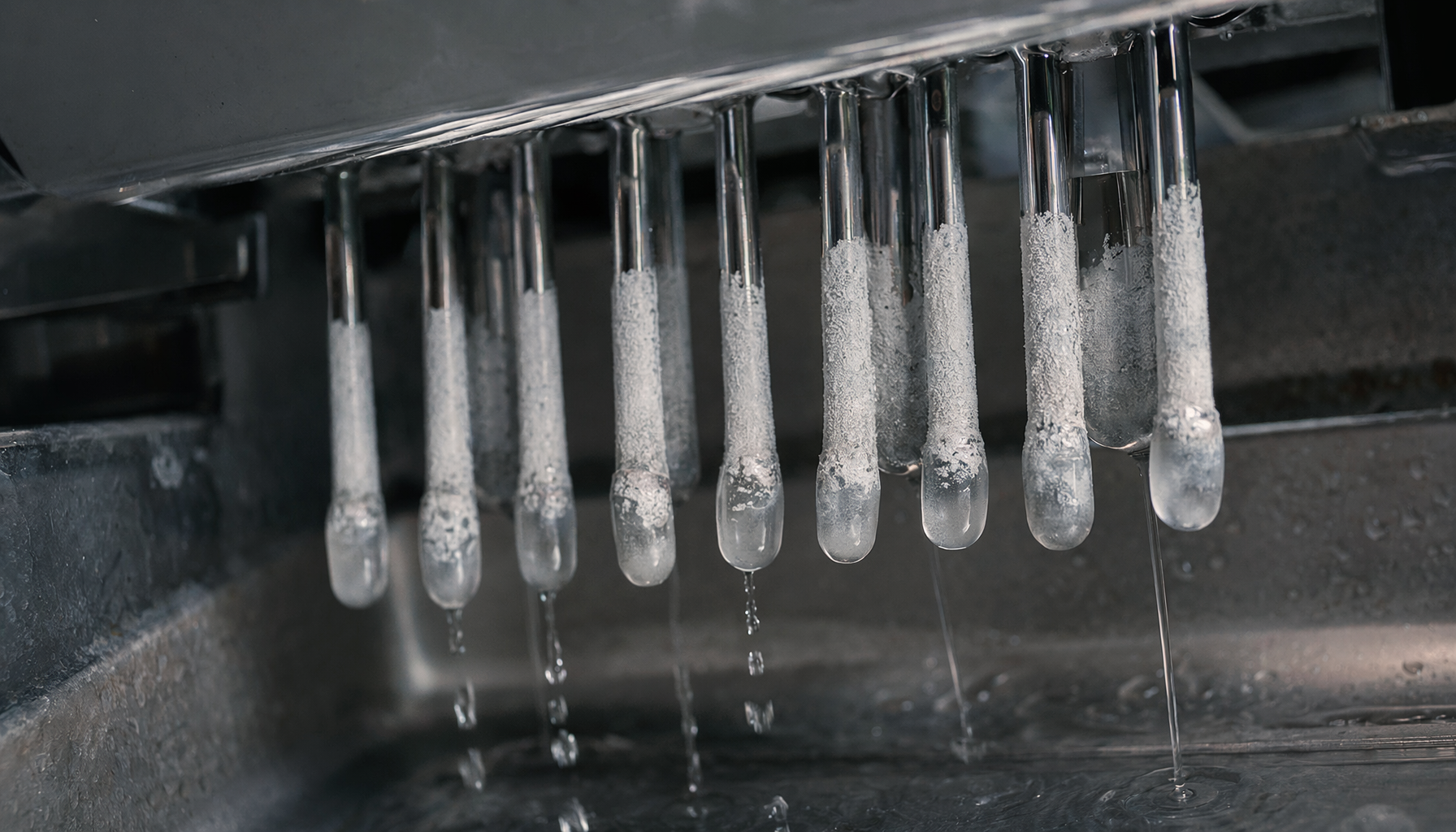
Descaling matters when the problem is incomplete or fragile ice rather than obvious dirt. Cleaning removes residue and film; descaling targets mineral deposits that slowly block water flow or interfere with freezing surfaces. If your ice maker uses a recirculating reservoir, mineral buildup can change how water coats the freezing surface, which leads to thin shells instead of solid cubes. In a commercial-style unit serving iced coffee, tea, or fountain drinks, this shows up quickly because the machine is asked to recover again and again throughout the day.
Use the cleaning product and dilution instructions intended for your machine whenever possible, and do not improvise with harsh chemicals or concentrated mixtures. A practical routine for many homes is monthly bin cleaning, more frequent wipe-downs when use is heavy, and periodic descaling based on water hardness and output. In a lake cabin, RV, or seasonal rental, do a full clean before storage and again before restarting the machine after it has sat unused.
A simple cleaning sequence
- Turn the machine off and remove the ice.
- Empty the water reservoir or disconnect the water feed if applicable.
- Wash removable bins or scoops with mild soap and warm water.
- Wipe interior surfaces and rinse as directed by the manufacturer.
- Run the descaling cycle if the unit supports one.
- Rinse thoroughly and discard the first batch of ice after deep cleaning.
How to Tell Maintenance Issues From Failing Parts

A maintenance problem usually changes gradually. The cubes get smaller, the machine slows down, or only some batches look weak. A failing part is more likely to create abrupt behavior: no fill, intermittent fill, early harvest, leaking, or ice that suddenly shifts from normal to unusable. That distinction helps you avoid replacing parts when the real issue is scale or a six-month-old filter that should have been changed weeks ago.
Start with what you can verify without disassembly. Checking freezer temperature, replacing an old filter, inspecting for a kinked or frozen water line, and confirming the unit is level covers the most common causes first. On a portable machine, do the equivalent check: water level, reservoir cleanliness, vent clearance, and scale. On a commercial machine, also look at production timing. If the unit keeps cycling but batch size is dropping, maintenance is still more likely than total component failure.
Move to repair decisions when the machine stays inconsistent after those basics. A thermostat or control issue can trigger harvest too early. An inlet valve may open weakly or not consistently. A damaged ice mold or freezing surface can also create malformed cubes. If the machine is older, compare the repair cost with the actual use case. A home backup unit used for weekend parties has a different replacement threshold than a daily office machine or a compact unit that travels in an RV every week.
Repair or replace?
Repair usually makes sense when:
- The machine is otherwise in good condition.
- The problem is isolated to one serviceable part.
- Cleaning and descaling improved performance but did not fully restore it.
- The unit fits a specific installation, such as an undercounter space or built-in beverage station.
Replacement usually makes more sense when:
- Multiple symptoms show up at once: weak ice, leaking, erratic cycling, and poor recovery.
- The machine has heavy scale history and repeated service issues.
- The repair estimate approaches the value of the unit.
- Your use case has changed and you need more capacity or easier maintenance.
Storage, Ventilation, and Daily Habits That Prevent Repeat Problems

Prevention is mostly about consistency. Ice makers perform better when they are kept clean, supplied with steady water flow, and used in conditions that match their design. That is true whether the machine lives in a home kitchen, a travel trailer, a basement bar, or a light-business beverage setup. If your machine only runs for holidays or summer entertaining, storage habits matter almost as much as active use habits.
Before long storage, drain the unit completely, dry the bin and reservoir, and leave the interior clean. This reduces stale odors, residue buildup, and startup issues later. For fresh ingredients stored nearby, government storage guidance emphasizes conditions that minimize deterioration while maintaining quality and microbial safety, and the same mindset applies around your ice station: keep the surrounding area dry, organized, and easy to clean so the machine is not working in a cluttered, warm, or dusty corner.
For day-to-day operation, match the machine to the job. A portable countertop unit is convenient for guest rooms, RV trips, tailgates, and small apartments, but it should not be expected to cover all-day peak demand for a busy office lunch area. A higher-capacity home or commercial-style machine can handle more recovery, but only if cleaning and water maintenance keep pace with that workload. Using the wrong machine for the demand pattern often looks like a “bad ice” problem when it is really an operating mismatch.
FAQ
Q: Why does my portable ice maker make hollow bullet ice after working fine for months? A: The most likely causes are restricted water flow from scale or residue, a low reservoir level, poor ventilation, or warm room conditions. Start with a full cleaning and descaling, make sure the unit is level, and give it open space around the vents before assuming the pump or control system has failed.
Q: Can low water pressure cause incomplete cubes in a commercial or built-in ice maker? A: Yes. If the machine cannot fill fully during each cycle, cubes may come out hollow, short, or fragile. Check filters, supply valves, screens, inlet lines, and scale buildup first. In a high-use setting, even a partial restriction can show up quickly during busy periods.
Q: Should I keep using the machine if the ice looks thin but it is still making batches? A: You can usually keep it running long enough to troubleshoot, but it is better to address the issue early. Thin ice melts faster, stresses production during heavy use, and may point to scale or a water-supply restriction that gets worse over time. Clean it, inspect the water path, and replace filters before the symptom turns into no ice at all.
Practical Next Steps
If your ice cubes are hollow or incomplete, start with the highest-probability fixes: confirm temperature, replace or inspect the filter, check the water line, clean the bin, and descale the machine. If those steps restore full cubes within a few cycles, the issue was probably maintenance or water flow.
If the problem stays the same after that, move to a repair decision centered on the inlet valve, thermostat/control timing, or worn internal parts. For homes, RVs, and light-business setups, the best long-term result usually comes from matching the machine’s capacity to the real workload and keeping a regular cleaning and descaling schedule instead of waiting for the ice quality to drop.

Hinterlasse einen Kommentar
Diese Website ist durch hCaptcha geschützt und es gelten die allgemeinen Geschäftsbedingungen und Datenschutzbestimmungen von hCaptcha.