
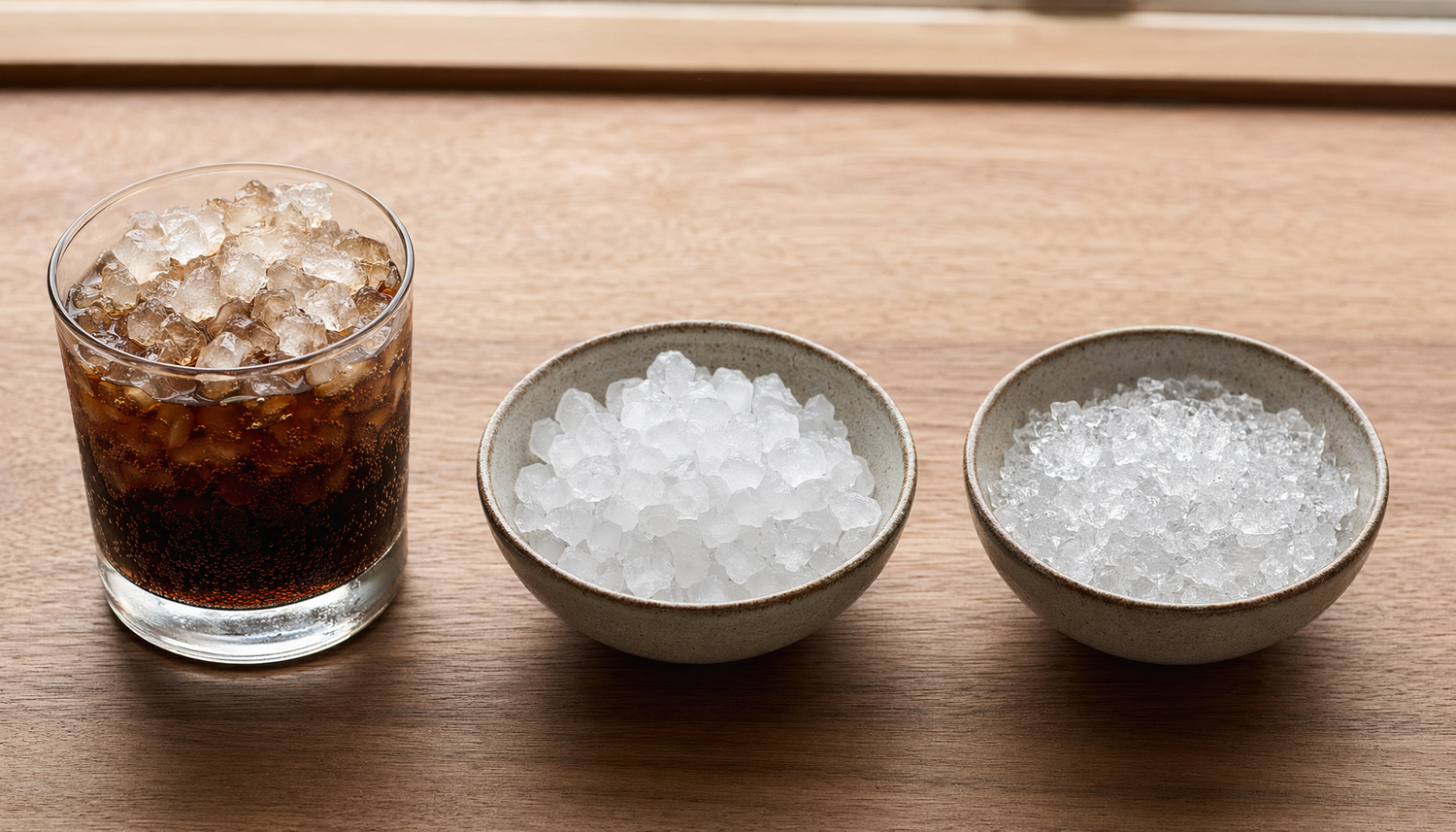
For most people who like to chew ice, nugget ice is the better everyday choice because it is softer, more compressible, and usually less watery in the glass than loose crushed ice. Crushed ice still makes sense when your top priority is the fastest chill or a more slushy drink texture.
If you always end up crunching the last ice in a soda, iced coffee, or sparkling water, you have probably noticed that some ice feels pleasant to chew and some feels rough right away. Across modern countertop testing, nugget machines usually cost more and take longer than basic ice makers, but they produce the chewable texture people are specifically shopping for. This guide will help you decide based on texture, melt speed, dilution, and the kind of machine that actually fits your kitchen, RV, or small drink station.
What Actually Separates Nugget Ice From Crushed Ice?

How each type is made
Nugget ice is compacted flake ice, so each piece starts as thin frozen layers that are pressed into small pellets with tiny air pockets inside. That production method is why nugget ice is often called pebble ice or a brand-style ice: it is not a solid cube at all, but a compressed cluster of smaller frozen bits. The result is an opaque, airy piece that gives slightly under pressure instead of fighting back like a hard cube.
Crushed ice is different because it is usually made by breaking larger, denser ice into irregular pieces. Sometimes that means a refrigerator dispenser crushing cubes, sometimes a commercial crusher, and sometimes a blender pulsing solid ice into fragments. The shape is less uniform, and the texture can range from snow-like bits to sharp shards depending on how the original ice was made and how aggressively it was broken.
Why shape changes the bite
The science is simple: trapped air, surface area, and density decide how ice feels. Nugget ice has more internal air than clear or solid cube ice, so it feels lighter and more chewable. Crushed ice often comes from dense cubes, so even when the pieces are smaller, the fractured edges can feel harder or sharper when you bite down.
Clarity also tells you something about structure. Clear ice has very little trapped air, which is why it looks transparent and melts slowly. Nugget and crushed ice are usually cloudy because air is trapped inside or between pieces. For ice chewers, that cloudiness is not a flaw; it is part of the reason the ice feels less dense. For sipping drinks slowly, though, that same structure usually means more melt than clear ice.
Which One Feels Better to Chew?

Texture and bite pressure
For direct chewing, nugget ice usually wins because it breaks down in a more predictable way. Instead of splintering into jagged fragments, it compresses, cracks, and crumbles. That makes it more satisfying for people who like to chew the ice after finishing a fountain drink or refillable water bottle.
Crushed ice is less consistent. If it is finely crushed, it can feel light and fast-melting. If it comes from hard cubes, it can feel uneven, sharp, or aggressively cold on the teeth. That inconsistency is the main reason frequent ice chewers often prefer nugget ice over a standard fridge-crusher setup.
Factor |
Nugget Ice |
Crushed Ice |
Structure |
Compacted flakes |
Broken cubes or blocks |
Texture |
Soft, airy, compressible |
Irregular, from fluffy to jagged |
Clarity |
Opaque |
Opaque |
Melt speed |
Fast, but usually slower than crushed |
Fastest |
Dilution |
Moderate to high |
Highest |
Typical source |
Nugget ice maker |
Fridge dispenser, crusher, or blender |
A practical note for frequent ice chewers
Any ice is still frozen water, so the better question is not whether one type is “safe,” but which one is less harsh in normal use. Nugget ice is the more forgiving option because the pieces are smaller and more porous. If you already have sensitive teeth, crowns, veneers, or other dental work, the practical move is to avoid biting large frozen chunks and let the ice soften slightly in the drink before chewing.
That trade-off matters most if ice chewing is a daily habit rather than an occasional thing. A dense cube broken into hard shards may technically be “smaller” than a nugget, but it does not usually feel easier to bite. For comfort, consistency, and chewability, nugget ice is the more purpose-built format.
Which One Works Better in Drinks?

Fast chill versus fast dilution
Nugget ice cools drinks quickly because the pieces have plenty of surface area and close contact with the liquid. Compared with traditional cubes, that often means faster and more even chilling. Compared with crushed ice, though, nugget ice usually holds up a little better because it has slightly less exposed edge area and a more compact shape.
Crushed ice is the faster-melting choice. That is useful when you want a drink to get cold immediately or take on a lightly slushy texture, but it also means more dilution. If you like to chew the ice after the drink is gone, crushed ice can disappear before you get that far. Nugget ice usually leaves more chewable pieces behind.
Best uses by drink style
Nugget ice is a strong fit for fountain drinks, iced tea, lemonade, flavored water, and cold brew because it cools fast, is pleasant to chew, and keeps a drink feeling full of ice without becoming watery as quickly as loose crushed ice. It also tends to hold a bit of drink flavor in its porous structure, which some people enjoy when chewing the last pieces.
Crushed ice is better when the drink is supposed to be aggressively cold and diluted on purpose, such as a julep-style cocktail, a tiki drink, or a quick backyard cooler where you expect fast melt. If your priority is clarity, slow melt, and keeping carbonation lively, neither nugget nor crushed is the best answer; dense clear ice is better for that job because low-air ice melts more slowly and interferes less with fizz.
What Kind of Machine Do You Actually Need?

Home, apartment, and RV setups
Most countertop and portable ice makers do not make true crushed ice. They usually make bullet ice, clear ice, or nugget ice, while crushed ice normally comes from a separate crushing mechanism or a refrigerator dispenser. That matters because many buyers assume a countertop unit can switch between chewable nugget ice and crushed ice on demand, when in reality you usually need to choose your preferred ice type first.
Portable nugget ice makers are the better fit if the goal is chewable ice at home, in an apartment, or at an RV site with power and counter space. In this category, realistic daily output is often listed in the roughly 24- to 44-lb range under ideal conditions, while storage is much smaller, often around 1 to 3 lb at a time. That means these machines are best for steady use throughout the day, not for making one huge batch and expecting it to stay frozen in the basket.
Small office, break room, or light beverage service
If several people fill cups all day, a nugget machine starts making more sense than constantly buying bags of ice or crushing cubes by hand. Seasonal demand is real because packaged ice purchases lean heavily between Memorial Day and Labor Day, so summer drink traffic can expose a machine that looked adequate in spring. For a break room, salon beverage corner, or casual waiting area, consistent nugget production is usually more useful than a one-time pile of crushed ice.
If you plan to bag ice, sell drinks, or operate beyond casual office use, food facilities in interstate commerce generally need registration and safe, sanitary operating practices. For a light-business buyer, that means the decision is not only about texture. It is also about cleanable surfaces, stable daily output, scoop handling, and whether your local rules treat the machine as part of a food operation.
Ice Quality Is Not Just About Shape

Water quality and handling matter first
Ice is legally treated as food, which is why water quality matters before you even compare nugget and crushed textures. The FDA Food Code says ice used as food or as a cooling medium must be made from drinking water, and it separates “serving ice” from ice that has already been used to cool the outside of packages or equipment. In plain terms, great texture cannot rescue stale-tasting water or sloppy handling.
That rule is especially important for chewable ice because you experience the ice directly, not just the temperature it gives the drink. If your water has off flavors, mineral heaviness, or refrigerator odors, nugget ice can make that more noticeable because its porous structure holds onto flavor. Clean water and a clean bin matter at least as much as choosing the right machine.
Cold does not equal clean
FDA handling guidance for ready-to-eat food includes protecting ice and ice utensils from contamination. That is the practical reason to wash the scoop, empty melt water, wipe the bin, and avoid tossing random utensils into stored ice. The Food Code also bars storing in-use utensils directly in the ice bin, because ice that will be eaten has to be handled like food.
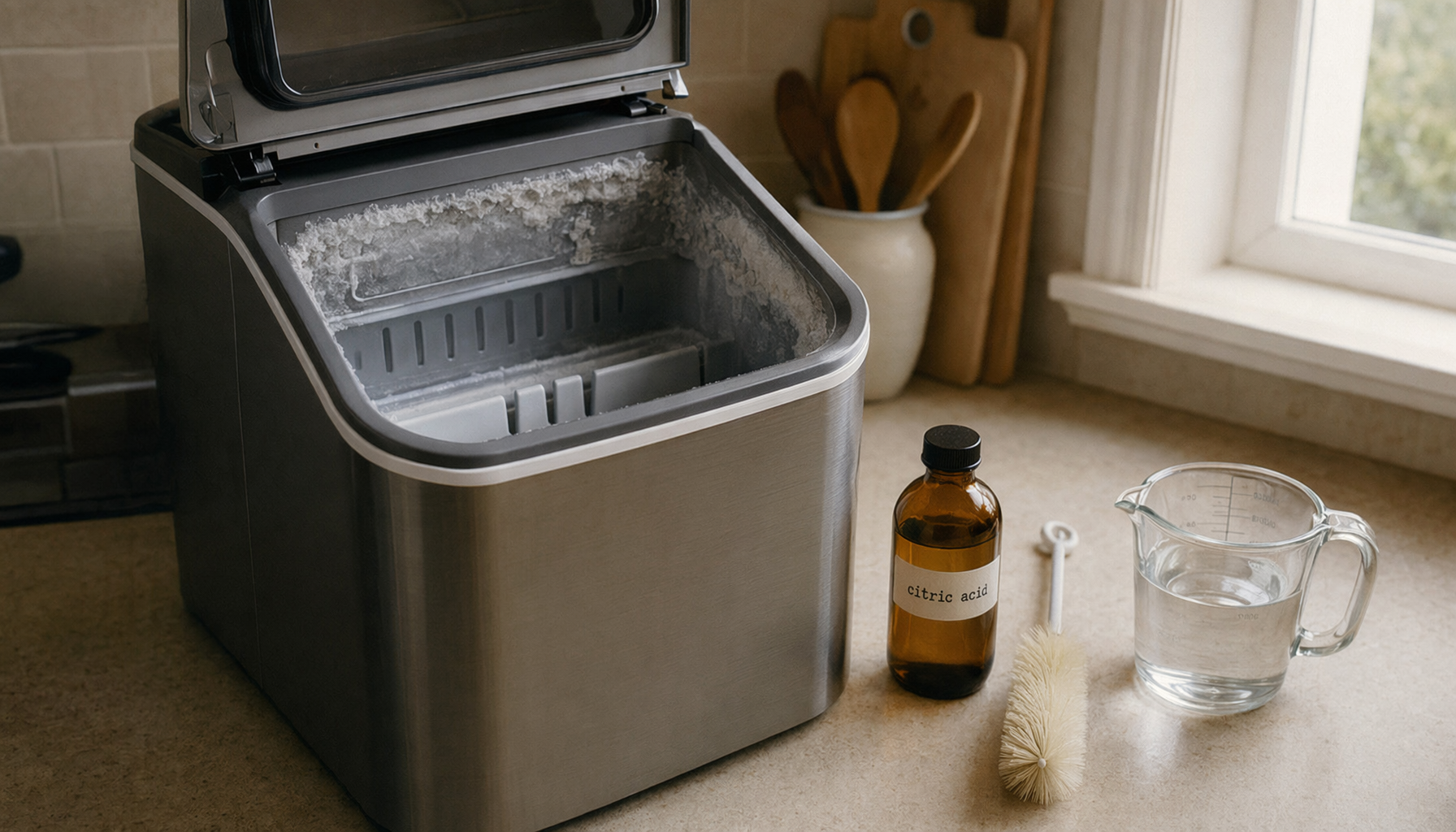
Cold equipment also should not be treated like self-sanitizing equipment. In a federal sampling assignment of 89 ice cream production facilities, Listeria monocytogenes showed up in 19 facilities, mostly on non-food-contact surfaces. That was not a home ice maker study, but it is a useful reminder that cold environments can still collect residue and contamination if cleaning slips. For home use, routine descaling and reservoir cleaning protect taste. For light business use, they also protect consistency and compliance.
FAQ
Q: Do portable ice makers usually make crushed ice? A: Usually no. Most portable and countertop units make nugget, bullet, or clear-style ice. True crushed ice usually comes from a refrigerator crusher, separate crushing mechanism, or a blender working on solid ice.
Q: Why does nugget ice look cloudy instead of clear? A: Nugget ice contains trapped air because it is made from flaked ice that gets compacted into pellets. That airy structure is part of what makes it softer and easier to chew, but it also means it is not crystal-clear like dense bar ice.
Q: Is crushed ice better for drinks than nugget ice? A: It depends on the drink. Crushed ice is better when you want the fastest chill and more dilution, such as slushy or julep-style drinks. Nugget ice is better when you want a chewable texture, quick cooling, and a drink that does not thin out quite as fast.
Practical Next Steps
If your main goal is chewability, choose nugget ice. It is the more comfortable texture, the more consistent bite, and the more realistic match for all-day use in soda, iced coffee, tea, and water.
If your main goal is speed and slush-like dilution, choose crushed ice. It cools fast and works well for certain cocktails and quick-chill use, but it usually disappears faster and feels less consistent to chew.
If you are buying a machine, decide on the ice type before you compare features. Most countertop models are built around one style of ice, and for chewable ice lovers, a nugget machine is usually the right tool. After that, focus on practical details: output under ideal conditions, storage capacity, cleaning routine, water quality, and whether the machine is for home, RV, or light-business demand.


Laisser un commentaire
Ce site est protégé par hCaptcha, et la Politique de confidentialité et les Conditions de service de hCaptcha s’appliquent.