
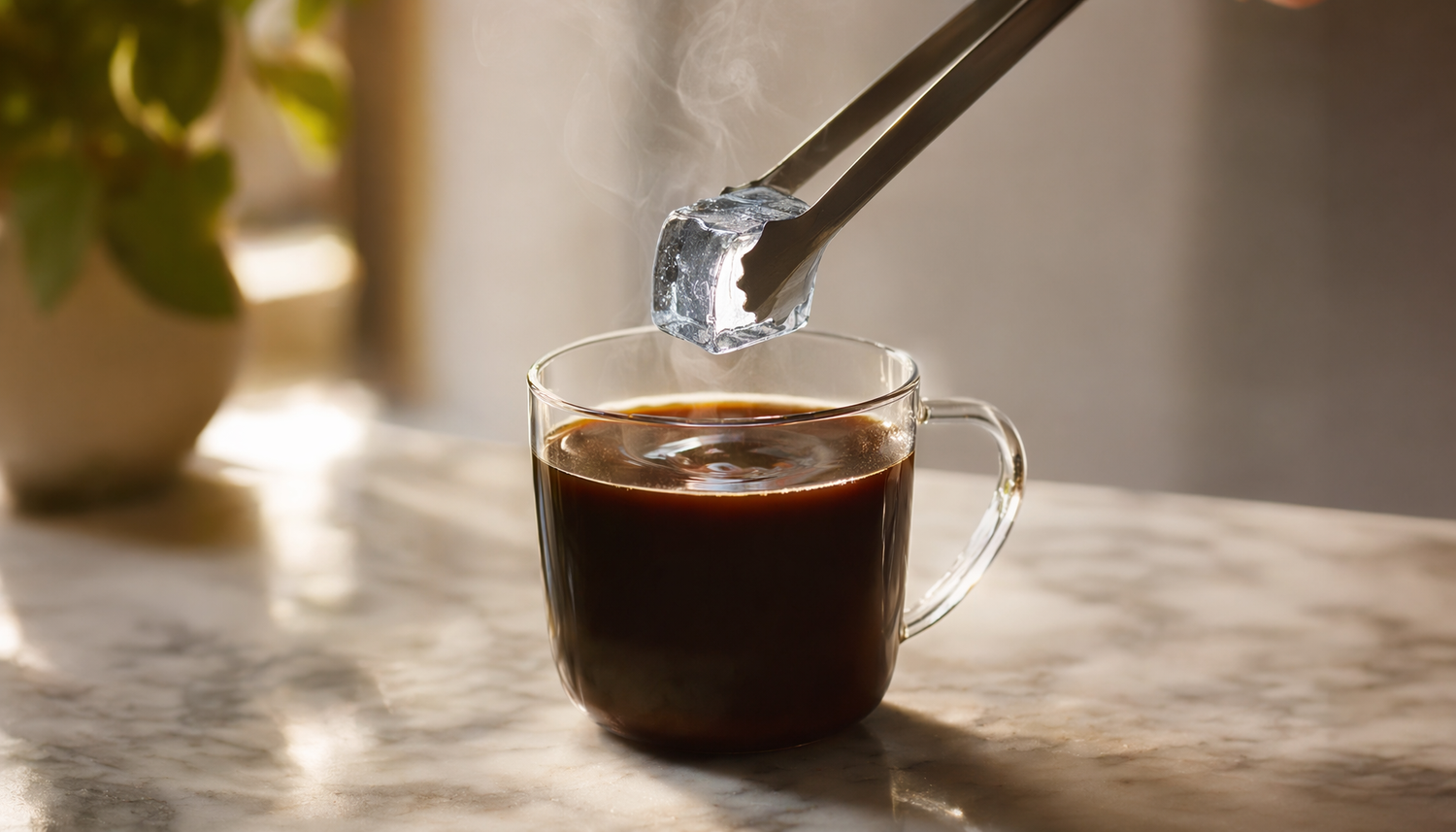
A glass usually cracks when the temperature changes too fast, not simply because ice touched hot liquid.
Have you ever dropped a few cubes into hot coffee or tea and heard the glass ping, split, or fail a few seconds later? That usually happens because one part of the glass heats or cools much faster than another part, creating stress across the cup. The sections below show how to lower that stress by choosing the right glass, using the right ice, and serving hot drinks more carefully at home, on the road, or in light beverage service.
Why Ice Can Crack a Glass in a Hot Drink

Thermal shock happens when rapid temperature change creates internal stress in glass. In a hot-drink-and-ice situation, the inside wall of the glass near the beverage may be heating while the area touching the ice is cooling at the same time. That uneven expansion and contraction is what creates the problem.
Glassware can shatter under sudden temperature changes, and the risk is higher when the glass is already cold, thin, scratched, or made from standard soda-lime glass. A crack may appear immediately, but delayed failure also happens because stress continues to build for a short time after the drink is poured.
In practical terms, the most dangerous combination is simple: a cold glass, a very hot beverage, and dense ice added all at once. That is why a mug can survive hot coffee by itself, or iced water by itself, but fail when both extremes meet suddenly.
The Temperature Difference Matters More Than the Brand Name
The failure mechanism is about temperature gradient, not just product labeling. Even stronger drinkware can crack if one area is exposed to a sharp hot-cold swing while another area stays far behind.
This is also why countertop conditions matter. A hot glass placed on a wet stone surface or filled while coming straight out of a cold car refrigerator is under more stress than the same glass at room temperature.
Which Glassware Is Safer for Hot Drinks and Ice

Borosilicate glass resists thermal shock better than soda-lime glass, while tempered soda-lime glass is often better at handling bumps and drops. For someone mixing hot beverages with ice, that trade-off matters: impact resistance and thermal-shock resistance are not the same thing.
A university’s thermal-shock guidance also notes that older borosilicate-style cookware and glassware generally handle fast temperature changes better than typical tempered soda-lime pieces used in much of today’s consumer glassware. That does not mean borosilicate is unbreakable. It means it gives you a wider safety margin when adding heat or cold.
For home use, a thick borosilicate mug or double-wall borosilicate cup is usually the safer choice if you regularly serve hot drinks with a small amount of ice. For travel or light-business beverage service, insulated stainless steel is often the lower-risk option when presentation does not require clear glass.
What to Avoid
Do not use visibly chipped, scratched, or hairline-cracked glass. Small damage points concentrate stress and can turn a manageable temperature swing into a break.
Avoid very thin decorative glass for hot drinks with ice. It looks clean on a coffee bar, but it usually gives you less margin for error than purpose-made hot beverage glassware.
How Ice Type Changes the Risk

Ice is not all the same. Shape, density, surface moisture, and size affect how quickly the hot drink loses heat at one contact point. That changes both glass stress and drink quality.
Small bullet ice from a portable ice maker often has more surface area relative to its size and usually melts faster than larger, denser cubes. That can be useful when you want to cool a drink quickly, but it can also create a sharper local cooling effect if several pieces settle against one side of the glass. Nugget or chewable ice is softer and easier to bite, but because it has many small contact points and melts quickly, it tends to cool and dilute a drink faster than a large clear cube.
Clear, dense cubes from a commercial ice maker or well-frozen tray usually melt more slowly and dilute less. That is good for drink quality, but a large hard cube dropped into a hot glass can still create a strong cold spot where it makes contact. In other words, slower melt helps flavor, but it does not automatically make the glass safer.
Best Ice Choices for Hot Beverages
If your goal is to cool a drink slightly without stressing the glass, the safest approach is usually a small amount of partly tempered ice rather than a full handful of fresh, very cold cubes. “Tempered” here means letting the ice sit briefly so the surface is no longer at its coldest extreme.
For portable ice maker use at home or in an RV, smaller pieces can work well if you add them after the drink temperature has dropped a bit. For light commercial service, one or two moderate-size pieces are usually easier to control than many tiny pieces that spread unevenly and melt fast.
Ice Quality Still Matters
Ice clarity does not directly prevent cracking, but it does tell you something about density and trapped air. Cloudier ice often has more internal air pockets and can fracture more easily in the drink, while denser clear ice usually melts more steadily.
That affects beverage quality. If you are serving hot tea over ice for a quick cool-down, cloudy soft ice may chill fast but can thin the drink quickly. Denser ice generally gives better control over dilution, especially in coffee service, sample bars, or small catering setups.
A Safer Way to Add Ice to Hot Coffee, Tea, or Chocolate

The simplest fix is to reduce the temperature jump before the ice goes in. Let the beverage sit for a minute or two, or transfer it to a room-temperature vessel rather than pouring it straight into a glass that came from a cold cabinet, car refrigerator, or air-conditioned service bin.
Safe-handling advice for glass emphasizes avoiding sudden hot-to-cold changes. In drink service, that means warming the glass gently first, then adding the hot drink, then introducing a small amount of ice only after the glass has adjusted. If you need a bigger temperature drop, stir the drink before adding more ice instead of dumping everything in at once.
A practical sequence for home kitchens and office beverage stations works well: 1. Start with a room-temperature borosilicate or heat-rated glass. 2. Rinse it with warm tap water and dry it. 3. Pour in the hot beverage. 4. Wait about 60 to 90 seconds. 5. Add one or two pieces of ice, then stir. 6. Add more only if the glass remains stable and the drink still needs cooling.
Better Alternatives Than Dropping Ice Straight In
If you want an iced coffee result from a hot brew, cool the liquid first in a metal pitcher, then pour over ice into the serving glass. Metal moves heat faster than glass and is less vulnerable to thermal shock.
For cafes, pop-up beverage stands, and home entertaining, brewing stronger coffee or tea and then pouring it over ice into a room-temperature glass is usually better than trying to cool a full-strength hot drink with ice inside a fragile vessel. You get less dilution and less breakage risk.
How Appliance Setup Affects Ice Performance

Portable ice makers, commercial ice makers, and home cooling appliances do not produce identical ice. Portable models often make smaller bullet-shaped pieces quickly, which is convenient for RVs, apartments, break rooms, and hotel-style beverage setups. Commercial machines may produce fuller cubes, half-cubes, nuggets, or specialty shapes with more consistency across batches.
That matters because shape changes both the cooling rate and the contact pattern inside the glass. A single large cube tends to create one strong cold contact area. Nugget ice spreads contact across many points and cools faster overall. Half-cubes can stack closely in the drink, which increases surface contact and speeds dilution.
Storage conditions matter too. Ice fresh from a freezer bin or car refrigerator may have frost or surface melt that refreezes, making it stick together and fall into the glass as a clump. A clump can create a more abrupt cold load than separate pieces. Breaking that cluster apart before service is a small step that helps.
Matching Ice to the Use Case
For home coffee service, use one or two moderate pieces if you only want to bring the drink from very hot to pleasantly warm. For travel mugs, skip glass entirely and use insulated metal if the drink will be topped with ice during a drive.
For light-business use such as a breakfast station or dessert counter, keep separate serving guidance for hot drinks and cold drinks. Ice that works well in soft drinks is not always the best option for a hot tea glass, especially when staff are moving quickly.
Texture, Melting Rate, and Dilution: What Readers Usually Miss

Ice quality is not just about appearance. It changes how the drink feels and how safely it cools. Nugget or chewable ice is popular because it is soft and easy to consume, but its texture comes with faster melt and quicker dilution. That can be useful for sweet tea, flavored coffee, or quick-chill drinks, but less useful when you want to preserve strength and aroma.
Ice slurry is a semi-frozen mix of liquid water and ice crystals, and it cools quickly because it spreads cold through the liquid instead of concentrating it at one hard cube edge. For a beverage itself, that can be an efficient cooling method. For glass safety, though, a very cold slurry added to a hot thin-walled glass can still produce a harsh temperature swing, so it is better used after the drink has already cooled somewhat.
If flavor control matters, think in terms of dilution speed: - Large, dense cubes: slower melt, lower dilution, but stronger point contact. - Small bullet ice: faster cooling, faster dilution, easier portion control. - Nugget or chewable ice: very fast cooling, soft texture, quickest dilution. - Crushed ice or slurry: fastest cooling, highest dilution, least suitable for a very hot glass.
When Clarity Helps
Clear ice is useful when you want steady melt and a cleaner presentation in coffee bars, tea service, or small event setups. It is not a safety feature by itself, but dense clear ice is easier to predict because it usually melts more gradually than frosty, fractured pieces.
For Euhomy-style home and portable appliance use, that means the best ice is not always the coldest or the prettiest. The best ice is the one that fits the drink temperature, the glass type, and the amount of dilution you actually want.
FAQ
Q: Why did my glass crack a few seconds after I added ice instead of right away? A: Thermal stress can keep building after the ice enters the drink. One part of the glass may still be heating while another part cools sharply, so the failure can appear with a short delay.
Q: Is tempered glass always safe for hot drinks with ice? A: No. Tempered glass is often better against impact, but it still has limits with sudden temperature swings. Borosilicate is generally better for thermal-shock resistance, and either type can fail if the glass is cold, damaged, or exposed to a sharp hot-cold jump.
Q: Does ice from a portable ice maker behave differently from freezer-tray ice? A: Often yes. Portable ice maker ice is commonly smaller and may melt faster, which can cool a drink quickly but also raise dilution and create rapid local cooling. Denser tray or commercial-style cubes usually melt more slowly and give you more control.
Practical Next Steps
If you want to prevent cracking, focus on the whole setup rather than blaming the ice alone. Use room-temperature, heat-rated glass; avoid chipped or very thin pieces; let the hot drink cool briefly; and add a small amount of ice gradually instead of all at once.
For the most predictable results, match the ice to the job. Use moderate pieces for gentle cooling, nugget or chewable ice when fast chill and texture matter more than dilution, and insulated metal drinkware when you need the lowest-risk option for travel or busy beverage service.

Laisser un commentaire
Ce site est protégé par hCaptcha, et la Politique de confidentialité et les Conditions de service de hCaptcha s’appliquent.