
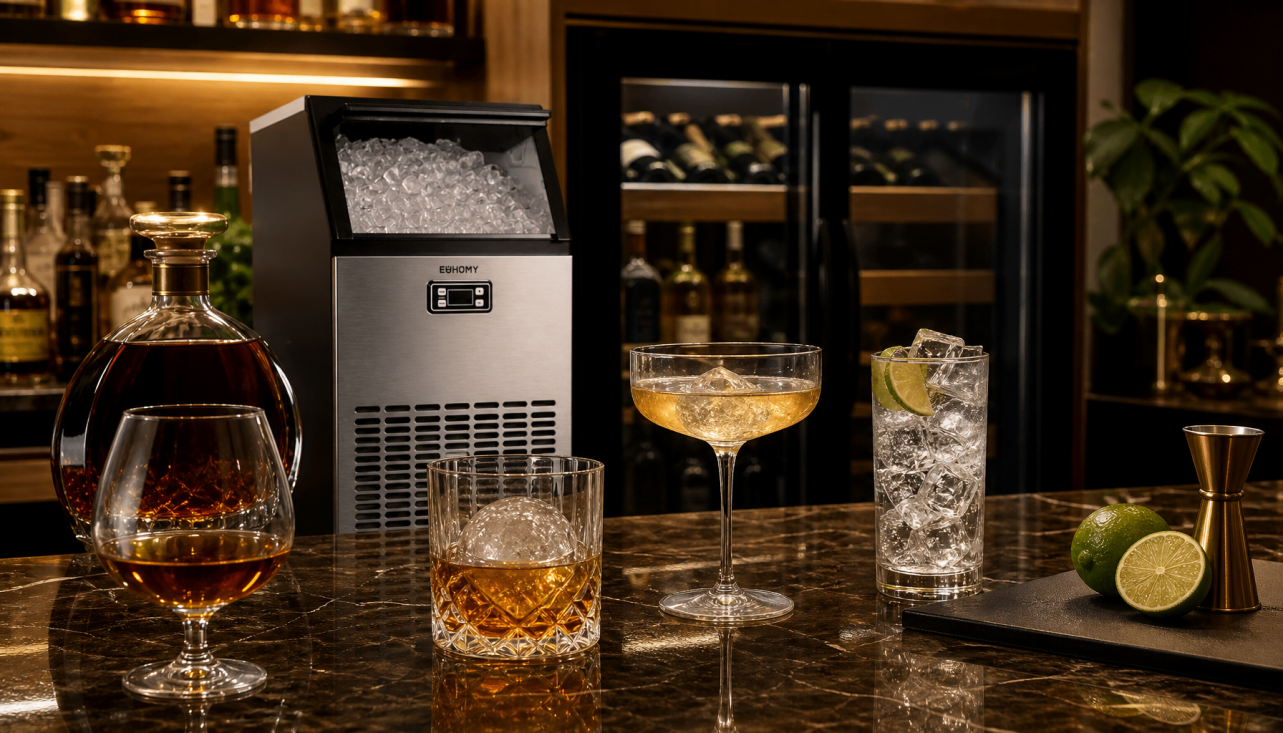
A glass is not just packaging: it changes what you smell first, how cold the drink stays, and how fast it opens up.
If your whiskey, gin, or tequila tastes flatter at home than it does at a good bar, the problem is often the glass, the ice, or both. The good news is that the fix is practical, and it can make home bartending feel more deliberate without making it fussy.
Glass Shape Changes the First Sip

Aroma comes first
A medium white wine glass often works better than a huge bowl for spirits because the shape gathers aroma and keeps alcohol vapor from rushing straight to your nose. That matters with gin, whiskey, and tequila, where the details are in the botanicals, grain, spice, oak, or fruit notes.
The same logic shows up in wine service: a bowl gives aroma room, while a narrower rim funnels it back toward you. In practice, that means the glass can make a spirit feel smoother before you even take a sip.
Wider is not always better
A rocks glass or shot glass spreads aromatics faster, which makes the drink feel louder and more alcoholic, but less layered. That is useful when the goal is a quick, straightforward pour; it is not ideal when you want to study the spirit.
For home tasting, a medium-sized stemmed glass is usually the most flexible choice. Very large red-wine-style bowls can overexpose the aroma and make the drink feel less focused.
The Main Glasses Bartenders Reach For

Neat pours and tasting glasses
Bartenders often use snifters, tulip-shaped wine glasses, or small stemmed tasting glasses for neat spirits because the stem limits hand heat and the bowl helps aroma build. a company’s cocktail glass guide also notes that glass choice affects presentation, temperature, and drink separation.
For a simple home bar, this means one good stemmed glass can cover a lot of ground. It is especially useful for whiskey tastings, tequila comparisons, and small pours of aged spirits after dinner.
Rocks, coupe, and highball service
A rocks glass is the default for spirit-forward drinks served over ice, while a highball is for long drinks with plenty of mixer and ice. A coupe is for shaken or stirred drinks served up, where the stem helps keep the drink cold.
That split is not just tradition. a publication found that shallow, wide coupes warmed drinks faster, while smaller stemmed glasses helped preserve chill and keep up drinks looking properly filled. For many home bartenders, a 6-ounce coupe or Nick & Nora is a better everyday choice than a giant martini glass.
Ice Controls Chill, Dilution, and Texture

Bigger cubes melt slower
Ice is part of the recipe, not just the garnish. an expert’s ice explainer notes that chilling and dilution happen together, and that large cubes melt more slowly because they have less surface area. a company makes the same point in service terms with 2-inch cubes and 1.8-inch spheres built for higher-end cocktails and whiskey.
That is why a large cube works so well in an Old Fashioned or neat bourbon pour. It cools the drink without flooding it too quickly.
Small ice serves a different job
Smaller cubes, crushed ice, and nugget ice chill faster, but they also dilute faster. a publication and a company both point to crushed and nugget ice for drinks that should feel frosty, soft, or quickly chilled.
That is why nugget ice works so well for iced coffee, frozen drinks, and casual entertaining: it cools fast and changes the texture in a way people often read as more refreshing. For daily rituals, that can matter as much as the spirit itself.
What Cooling Equipment Changes at Home

Countertop machines remove the bottleneck
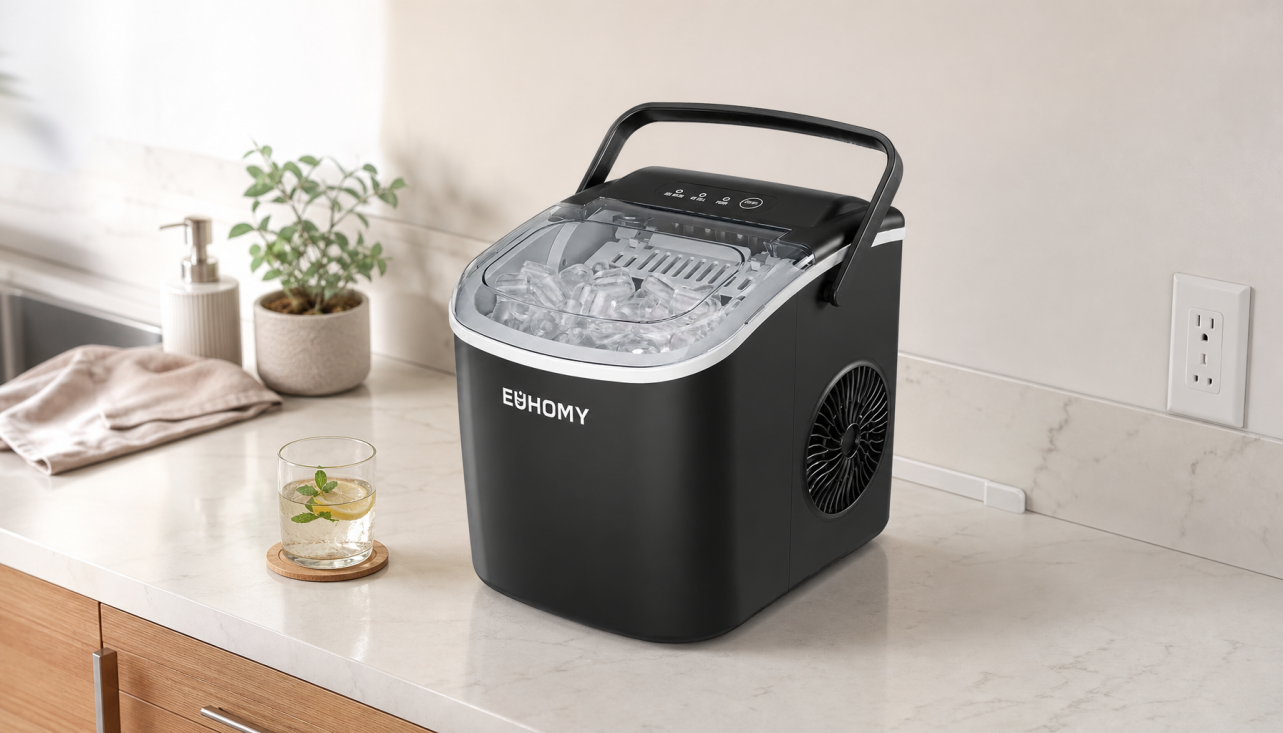
If you host often, the real problem is usually not the recipe. It is running out of good ice halfway through the evening. a magazine’s ice maker testing shows why countertop nugget and bullet-ice machines are popular for home entertaining: they keep drink service moving without freezer trays.
For a small apartment, weekend hosting, or a light business setup, that consistency is the value. You are not just buying ice; you are buying fewer interruptions.
Glassware and bottles need stable temperatures
A beverage cooler or small drink fridge helps the same way an ice maker does: it reduces drift. Bottles, mixers, and a few stemmed glasses stay ready instead of starting from room temperature, which makes every round more predictable.
That is also where hospitality lives. When the glass, the ice, and the bottle are already prepared, the drink feels intentional even if the recipe is simple.
A Practical Home Bar Setup

Keep the lineup small
You do not need every glass style. Start with a rocks glass, a coupe or Nick & Nora, and one highball. That covers neat pours, spirit-forward cocktails, and long mixed drinks without wasting cabinet space.
For ice, match the machine to the drinks you actually make. If you favor whiskey and stirred cocktails, choose slower-melting cubes or spheres. If you make iced coffee, frozen drinks, or casual mixed drinks, nugget or smaller cube ice is the better fit.
Think like a host, not a collector
The recommended home bar is the one that makes serving easier. One good stemmed glass, one sturdy tumbler, and reliable ice do more for entertaining than a shelf full of mismatched novelty glassware.
That is the larger point behind professional glass choice: the shape should support the drink, the pace, and the room.
FAQ
Q: Why not use one glass for everything?
A: Because different shapes change aroma, hand heat, spill risk, and dilution. A rocks glass, coupe, and highball each solve a different service problem.
Q: Is bigger ice always better?
A: No. Bigger cubes and spheres melt slower, but smaller cubes, crushed ice, and nugget ice are better when you want fast chill or a softer texture.
Q: What is the simplest home setup?
A: One rocks glass, one coupe or Nick & Nora, one highball, and a countertop ice maker that matches your space and drink volume.
Practical Next Steps

Start by swapping one glass, not your whole cabinet. Use a stemmed glass for neat tastings, a rocks glass for spirit-forward drinks, and a highball for long mixed drinks.
Then match your ice to your routine: big cubes for slow sipping, nugget or smaller ice for iced coffee and casual entertaining. That combination gives you the most noticeable upgrade for the least effort.

Laisser un commentaire
Ce site est protégé par hCaptcha, et la Politique de confidentialité et les Conditions de service de hCaptcha s’appliquent.