
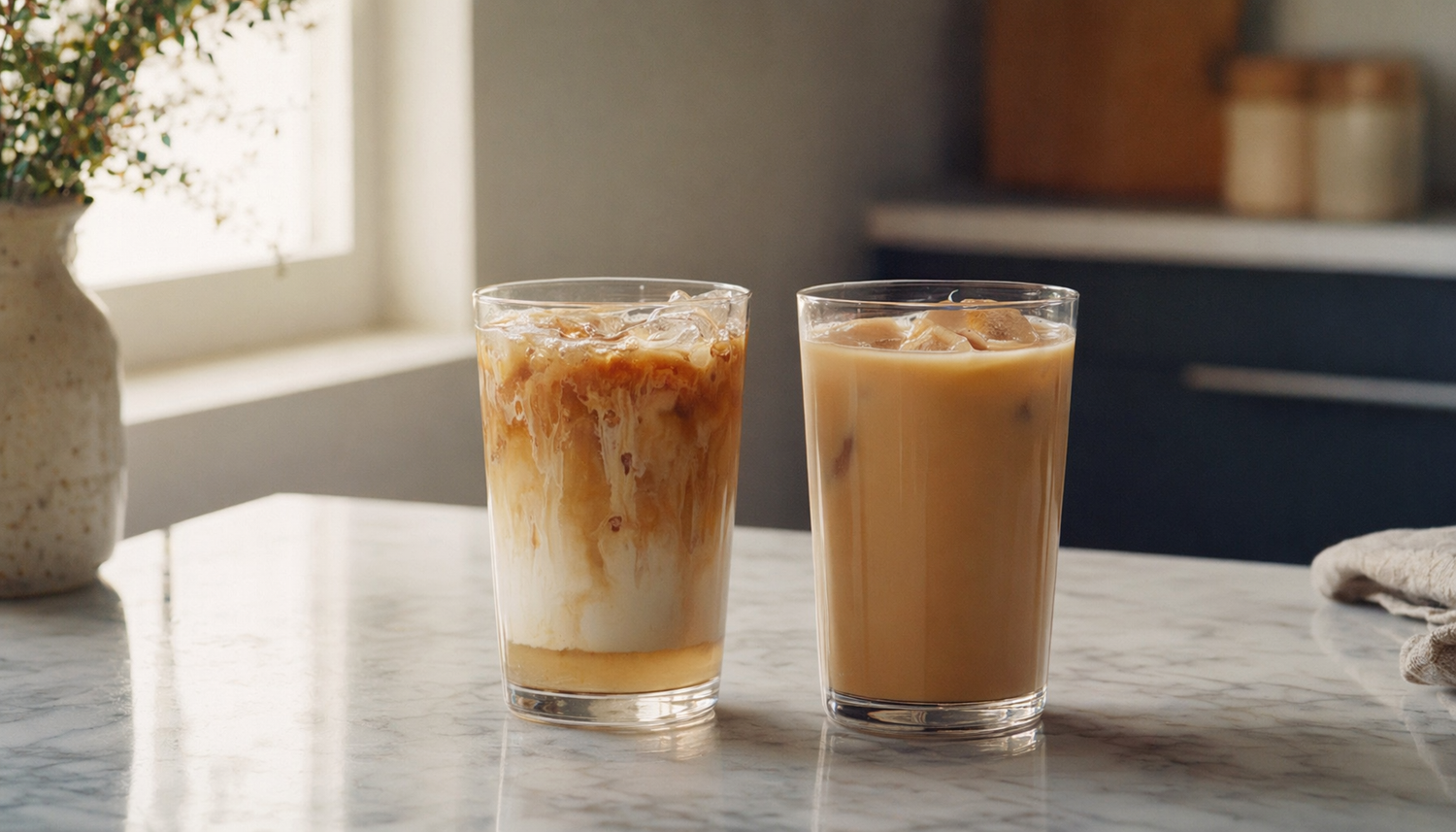
An iced latte usually separates because the coffee, milk, and ice are at very different temperatures and densities, so the drink layers and then dilutes unevenly. You can reduce it by chilling ingredients properly, using slower-melting ice, and building the drink in the right order.
You pour a latte over ice, and within a minute it looks striped, watery, or slightly broken. That is frustrating when you want a smooth coffee shop-style drink at home, in an RV, or at a small self-serve beverage station. A few practical changes to your ice, refrigerator setup, and mixing routine can make the drink look better, taste more balanced, and hold up longer in the glass.
What Separation in an Iced Latte Really Means

An iced latte can separate in a normal way or in a problem way. Normal separation is simple layering: dense, cold milk sits lower in the glass while coffee floats higher for a while, especially if you pour slowly over ice. That is mostly a visual issue, and a quick stir usually fixes it.
Problem separation looks different. You may see a thin, watery lower layer from fast dilution, or a slightly grainy, curdled-looking texture when very hot espresso shocks very cold milk. The drink may still be safe if the milk was fresh and properly stored, but the texture and flavor suffer.
Cold storage matters here because milk-based drinks are less forgiving than black iced coffee. Refrigerators should stay at 40°F or below, and milk or mixed latte batches should go back into cold storage promptly rather than sitting on the counter while you prep several drinks.
Three common separation patterns
A clearly layered latte is usually a pouring and temperature issue. A watery latte is usually an ice and dilution issue. A grainy latte is more often a hot-coffee-meets-cold-milk issue, especially if the espresso is fresh off the machine and the milk came straight from the refrigerator.
For home use, this distinction helps you fix the actual cause instead of changing everything at once. If your flavor stays good but the appearance changes, focus on build order and stirring. If flavor drops fast, focus on ice quality and pre-chilling.
Why It Happens Most Often

The most common cause is a big temperature gap. Hot espresso poured directly onto ice melts the top layer immediately, thinning the coffee before it even meets the milk. Then the milk and coffee settle at different levels because one part of the drink is colder, denser, and less diluted than the other.
Fast-melting ice makes that worse. Ice shape affects cooling and dilution because surface area and density change how quickly the ice gives up water. Nugget and bullet ice chill fast, which can be helpful for quick-service drinks, but they usually melt faster than dense cubes. Cube-style ice holds structure longer, so the latte stays stronger and looks more stable for longer in the glass.
Sweetener can also contribute. In cold drinks, plain sugar, honey, or brown sugar often do not dissolve well unless they are turned into syrup first. Undissolved sweetener can leave the drink tasting uneven, so one sip feels milky while the next tastes sharp and watery.
Hot coffee is usually the first thing to fix
If you brew espresso or strong coffee for an iced latte, give it a short cooling window before pouring. Even a few minutes helps. For a smoother result, many home users switch to cold brew concentrate, which starts cold, blends more evenly with milk, and avoids the rapid ice melt that comes from hot espresso.
Cold brew also changes flavor in a useful way for iced lattes. A 12- to 24-hour steep typically produces a smoother, less bitter coffee base than hot coffee that has been cooled down, which helps the milk and coffee taste integrated even before you stir.
How Better Ice Improves an Iced Latte

Ice is not just there to chill the drink. It controls how quickly your latte waters down, how long the drink keeps its structure, and whether the top half and bottom half stay reasonably balanced while you drink it.
For iced lattes, dense cube-style ice is usually the easiest choice if you want slower dilution. Nugget ice is enjoyable to chew and excellent for quick-chill drinks, party punch, mocktails, and some whiskey drinks, but in a milk-based coffee it can soften the flavor faster. Bullet ice works well for casual everyday use and quick turnaround, but it often melts faster than a dense cube.
A practical rule is simple: the faster the ice melts, the more likely your latte is to look separated and taste diluted. That is why ice choice matters more in milk drinks than in stronger cocktails or dark cold brew served black.
Matching ice style to the way you serve drinks
For one or two morning lattes at home, dense cube ice gives the most forgiving result. For travel, a portable ice maker that produces bullet ice is still useful, but it helps to chill the coffee and milk first so the ice is not doing all the work. For a brunch bar, office kitchenette, or light-business setup where you are serving iced coffee, smoothies, mocktails, and party punch from the same station, choosing the right ice shape becomes part of drink planning rather than a minor detail.
If you are comparing appliances, practical buying factors include ice shape, first-ice time, daily output, cleaning access, and placement clearance. In mixed beverage use, it is often smarter to separate jobs: use a refrigerator or beverage cooler to keep ingredients cold, and let the ice maker handle final chilling instead of forcing the ice to cool warm ingredients from scratch.
How to Build an Iced Latte That Stays Smoother

Start with cold ingredients. Keep milk fully chilled, and if you batch cold brew or pre-pulled espresso, store it covered in the refrigerator. Keeping refrigerated items at 40°F or below helps both food safety and drink consistency, because colder ingredients need less help from the ice.
Then use a stronger coffee base than you would for hot coffee. If the coffee is too weak, the first small melt from the ice can flatten the drink immediately. Cold brew concentrate works well here because you can dilute it intentionally instead of letting the ice decide the ratio for you. Many reliable home recipes land around a strong concentrate plus milk in a roughly 1:1 or 1:2 range, depending on how rich you want the drink.
Build order matters too. Fill the glass with ice, add milk, then pour the coffee slowly, or combine coffee and milk in a shaker or jar before adding ice if you want a more uniform look. Stirring before the drink sits for a minute is often the difference between an attractive layered drink and a watery-looking one.
A practical home formula
A consistent starting point is 1/2 cup strong cold brew concentrate, 1/2 cup cold water if needed, and 1/4 cup to 1 cup cold milk depending on how bold you want the drink. If you prefer a sweeter latte, use simple syrup or another fully dissolved sweetener rather than spooning sugar into the finished glass.
Coffee ice cubes are another useful fix when you want a slow drink. They help in home kitchens, backyard coffee bars, and small events because any melt adds coffee flavor instead of plain water. That same approach works well in iced mochas and some dessert-style cold brew drinks.
The Best Refrigerator and Beverage Cooler Setup for Latte Prep

A smoother iced latte often starts before you touch the coffee. If your refrigerator runs warm, is packed too tightly, or has milk stored near the door where temperature swings are larger, the drink becomes harder to stabilize. Cold air needs room to circulate, so overpacking reduces temperature consistency and can leave ingredients less evenly chilled.
For households that make iced drinks often, a dedicated beverage cooler or a clearly organized refrigerator shelf helps. Keep milk, cold brew, syrup, and ready-to-use glassware together so you can assemble quickly and return items to cold storage right away. That is especially useful for entertaining, weekend brunch service, or a small office setup where several drinks are made back-to-back.
If you batch lattes in a pitcher, treat them like other perishable prepared foods. Perishable items should not sit out longer than 2 hours, and the clock is shorter in hot weather. For travel days, tailgates, or mobile beverage service, a car refrigerator or well-managed cooler can keep milk and coffee cold until serving time, so the ice is preserving texture rather than rescuing warm ingredients.
When appliance details matter
For light-business or frequent-host use, sanitation-minded equipment design matters as much as output. Food equipment standards cover areas such as materials, design, and food equipment performance, which is relevant when you are choosing commercial-style refrigeration or ice-making equipment for repeated beverage service.
At the consumer level, the main lesson is simpler: stable cooling and clean, consistent ice give you more repeatable drinks. That applies whether you are making iced lattes, cold brew, mocktails, smoothies, or whiskey drinks that depend on quality ice and dependable cold storage.
FAQ
Q: Is my iced latte separating because the espresso is too hot? A: Very often, yes. Hot espresso melts ice immediately, thins the coffee, and creates a sharp temperature contrast with cold milk. Letting the coffee cool briefly, or using cold brew concentrate, usually reduces visible separation.
Q: Does ice shape really make a difference in an iced latte? A: Yes. Faster-melting ice usually creates faster dilution, which makes the drink look more separated and taste weaker. Dense cube ice is typically the safest choice for milk-based coffee, while nugget or bullet ice is better when quick chilling matters more than slow dilution.
Q: Should I chill the milk, the coffee, or both? A: Both is best. Cold milk alone helps, but chilled coffee or cold brew gives the most stable result because the ice is no longer forced to cool a warm ingredient first. That leads to better texture and a more controlled flavor balance.
Final Takeaway
If your iced latte separates, the problem is usually not the milk itself. It is more often a mix of hot coffee, fast-melting ice, weak coffee strength, or ingredients that were not chilled enough before assembly.
The most reliable fix is a simple system: keep milk and coffee cold, use slower-melting ice when possible, dissolve sweeteners before serving, and stir or pre-mix before the drink sits. For regular iced coffee drinkers, that is where a dependable refrigerator, beverage cooler, or portable ice maker becomes genuinely useful: it helps the drink stay balanced from the first sip to the last.


Laisser un commentaire
Ce site est protégé par hCaptcha, et la Politique de confidentialité et les Conditions de service de hCaptcha s’appliquent.